
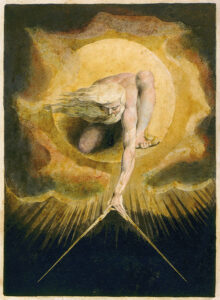
The Dead End of Intentionalism
The ordinary-language assumption that such metaphysical questions are resolved as soon as I raise my hand in a classroom or hug a friend when he tells me she has finally left him is given the lie by its own tacit metaphysics: a picture of reality as comprising two independent orders, one mechanical and complete in itself, the other normative and merely supervenient upon it. This is not a neutral description of our world, but a substantive—and historically specific—way of carving it up. By ordinary language’s own lights, moreover, the modern historical situation in which we experience ourselves as estranged from our own bodies, subject to economic mechanisms we do not control, generates a justified skepticism about the intentionality of our own bodily acts.
