» Nonsite Author: Nicholas Brown
October 1st, 2018
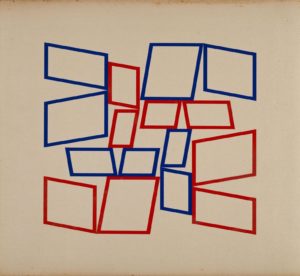
Hélio Oiticica, Tropical Hyperion
Helio Oiticica’s career tells the story of the democratic leap of art off the wall and into life, out of contemplation and into action and experience, from autonomy to involvement, from elite contemplation to democratic participation, from aesthetics to politics. This narrative, which carries the authority of being the story Oiticica himself wanted to tell at one point in his life, is not false. And yet the truth lies elsewhere: closer to the works themselves and, only apparently paradoxically, in the great political crosscurrents that tore through the Brazilian 1960s.
Posted in Article, Issue #25 | Comments Off on Hélio Oiticica, Tropical Hyperion
April 5th, 2016
What We Worry About When We Worry About Commodification:
Reflections on Dave Beech, Julian Stallabrass, and Jeff Wall
In an advertisement, the only intention that matters is to sell a product. All manner of decisions can and do saturate an advertising image, but these are subordinate to the purpose (Zweck) of selling the product. In a successful work of art, all kinds of decisions are subordinate to a larger intention as well; but that intention is analytically identical with the meaning (Zweckmäßigkeit) of the work, so it makes sense to speak of the work as a whole as saturated with intention. As we saw, art-commodities may well bear the marks of industrial processes. A work of art may, on the other hand, choose to exhibit them, which is a different matter altogether. We can tell the difference between bearing marks and exhibiting marks because works of art tell us how to tell the difference, each time.

Posted in Editorial, Issue #19 | 1 Comment
January 11th, 2016
Max Horkheimer and The Sociology of Class Relations
In the fall of 1943 Max Horkheimer composed multiple drafts of an essay entitled “On the Sociology of Class Relations.” The essay was intended for inclusion in the collaborative project with Theodor W. Adorno which came to be called The Dialectic of Enlightenment. One indication that the essay was crucial to their project was that Horkheimer solicited several responses to the working drafts including comments from Franz Neumann and Herbert Marcuse (on the East coast) and Friedrich Pollock and Adorno (in Los Angeles with Horkheimer).
Here for the first time is Horkheimer’s original essay in full and in its original English-language format plus five contemporary responses.
Posted in Issue #18, The Tank | Comments Off on Max Horkheimer and The Sociology of Class Relations
October 8th, 2015
Art as such does not pre-exist capitalism and will certainly not survive it, but rather presents an unemphatic alterity to it: art is not the before or after of capitalism, but its determinate other.
Posted in Feature, Issue #18 | No Comments
September 13th, 2013
Kurt Weill, Caetano Veloso, White Stripes
We are concerned with the problem of securing meaning against the ideological horizon of a fully market-saturated society. Meanings circulate or fail to circulate, compel or fail to compel. Success in the former, which is easily quantifiable, does not guarantee success in the latter, which is not.
Posted in Article, Issue #10 | Comments Off on Kurt Weill, Caetano Veloso, White Stripes
September 17th, 2012
In one of his last interviews Michel Foucault famously said “As far as I’m concerned, Marx doesn’t exist.” What he meant was that “Marx” as an author was something largely fabricated from concepts borrowed from the eighteenth century, in particular the writings of David Ricardo. From Ricardo he derived his most crucial idea: the labor theory of value. As Clune explains, neoliberalism has made that theory obsolete and with it, Marxist analysis. For Foucault there were several Marxisms in Marx.
Posted in Feature, The Tank | 9 Comments
March 13th, 2012
The Work of Art in the Age of its Real Subsumption under Capital
Whatever previous ages might have fancied, we are wise enough to know that the work of art is a commodity like any other. Chances are that we don’t have any very clear idea what we mean by that. Marx, however, does.
Posted in Editorial | 9 Comments