
Why Architecture Matters as Art as Never Before: Le Corbusier, Tony Smith and the Problem of Use
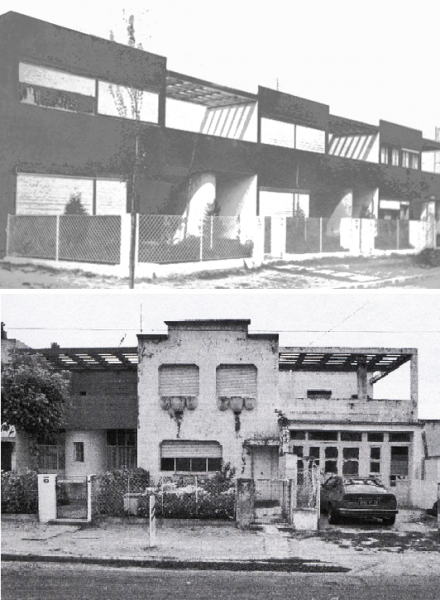
The real problem here is not the gap between intent and reaction, but rather with the simple fact that whether or not a building is actually used in the way the architect wishes, it is always made for a user. One could of course build structures exclusively for friends or for oneself but that feels more like an exemplification of the problem than a solution to it. There is no real possibility of fictionally or on any other level of not acknowledging the beholder/user, they are present at the conception and the realization of the work.
This Cannot Be Real: “Art and Objecthood” at 50

It’s important to note that the word “conviction,” Fried’s keyword for the effect produced by the successful painting, is an ambivalent term in his criticism. Sometimes the word refers to a judgment of value, or quality, defined loosely as the capacity of a given work to stand comparison with valued earlier masterpieces. But in “Art and Objecthood,” and at other key moments in his criticism—“Caro’s Abstractness,” for instance—“conviction” refers to the specific experience of the suspension of objecthood.
Art and Surrogate Personhood

Whereas, on Fried’s account, such theatricality and coercion by objects is a scenario to avoid, both 2001 film and novel presume the inevitability of spectacle and objecthood. They embrace the theatrical condition of their 1968-modernity as their 2001-future. It might even be the case that Kubrick was attempting to turn the entirety of his film into the experience of a minimalist object in a manner entirely congruent with Fried’s account.
Du Bois and the “Wages of Whiteness”: What He Meant, What He Didn’t, and, Besides, It Shouldn’t Matter for Our Politics Anyway
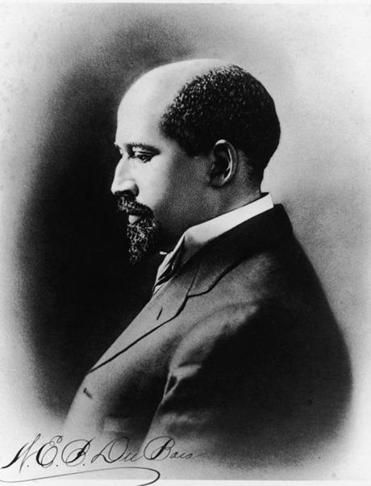
Since the emergence of what has been known as “whiteness studies” in the early 1990s, proponents of the view that the white working class in the United States rejects a class-based politics in favor of commitment to white supremacy have cited W.E.B. Du Bois’s reference in Black Reconstruction In America to a “psychological wage” that whiteness offers as supporting that view and, by extension, the necessity that combating racism and white supremacy takes priority over struggle against capitalist inequality.
Ritual Protest and the Theater of Dissent

The politics that inform these actions, where not entirely opaque, are based on a semi-spiritual belief that the right recipe of symbolism, passion, and powerful visuals will inspire significant political action that will alter the course of this or that unjust policy or state of affairs. Organizers want to inspire the people who view their protest images on their phones.
Issue #20: Political and Aesthetic Post-Mortem
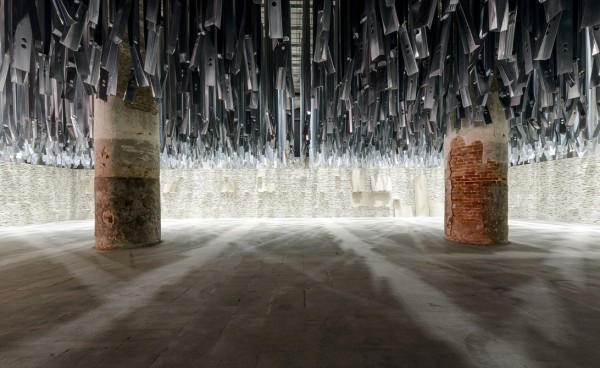
In this issue we offer reflections on “white working class” ideology and neoliberal history; on the ideology of craft at the Venice Biennale; on the contested meanings of formalism; three unpublished pieces by Allen Grossman; Michael Fried on “Encountering ‘September Sky’”; new poetry; and reviews of Lisa Florman on Kandinsky and Jill Cassid on the Enlightenment Subject.
The New Cult of Consensus
The social bases of political conflict thus erased, consensus historians go on to suppress the significance of antislavery politics, even to the point of denying that politics played any role in whatsoever in the destruction of slavery. These crucial erasures are once again explained by reference of a broad political consensus—not the liberal consensus of Hofstadter and Hartz, but the smothering, all-consuming consensus in favor of “white male supremacy.” It’s still consensus history; it’s just a different consensus.
The Origin of the Species
The “white working class,” like the “black community,” is an abstraction that does not exist anywhere in the real world. The U.S. working class is broad and diverse. It’s not even all that white any more and certainly not all that male. Its conditions are determined by its position within a political economy but, like everyone else, the experience and consciousness of individual workers is formed by a whole series of contingent relationships and experiences. The recent use of the trope of the angry white working class attempts to extract white workers from these class dynamics and present them as a demonized and marginalized natural group.
Three Texts by Allen Grossman
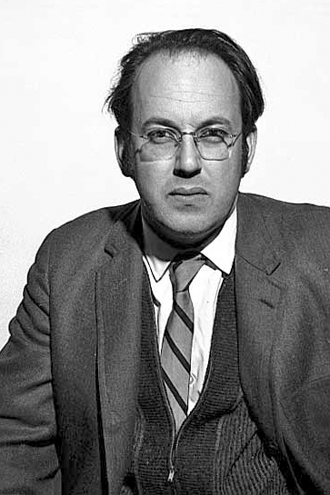
These three texts are a small part of a significant body of unpublished and uncollected work by the poet and critic Allen Grossman.
Eulogy for Martin Luther King Jr.

The death of Martin Luther King leaves, in my imagination, no liberal position. Only a radical critique of learning and, if that is still worthwhile, of political life, is sufficient.