
This talk was delivered on November 30, 2024 at the Studio School, shortly after the publication of my new monograph on Frankenthaler.
Let me begin by saying I am delighted to be back at the Studio School, for which painting is a priority, to speak about my new monograph on a great painter—and printmaker—Helen Frankenthaler.
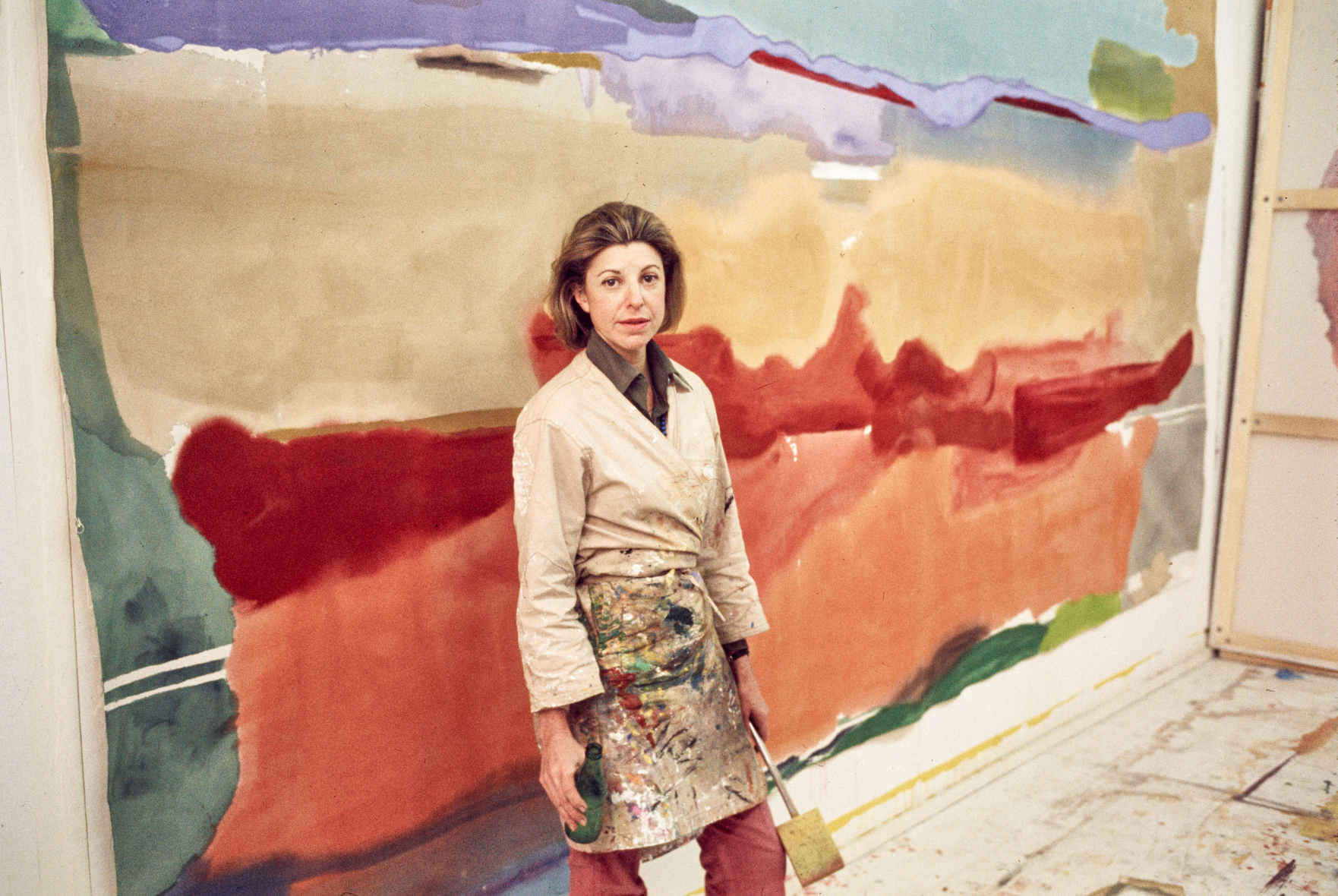
I first met Helen, in 1976, shortly after the opening of my inaugural exhibition as a curator at The Museum of Modern Art, devoted to Henri Matisse, André Derain, and their Fauvist colleagues. On April 22, a message from her was delivered to me from the Museum’s Information Desk: “They’re throwing me out …. I can’t stay any longer. 9 pm alas. This is a fan note hastily left at the desk to say, your Fauve show is great, inspiring, necessary.”
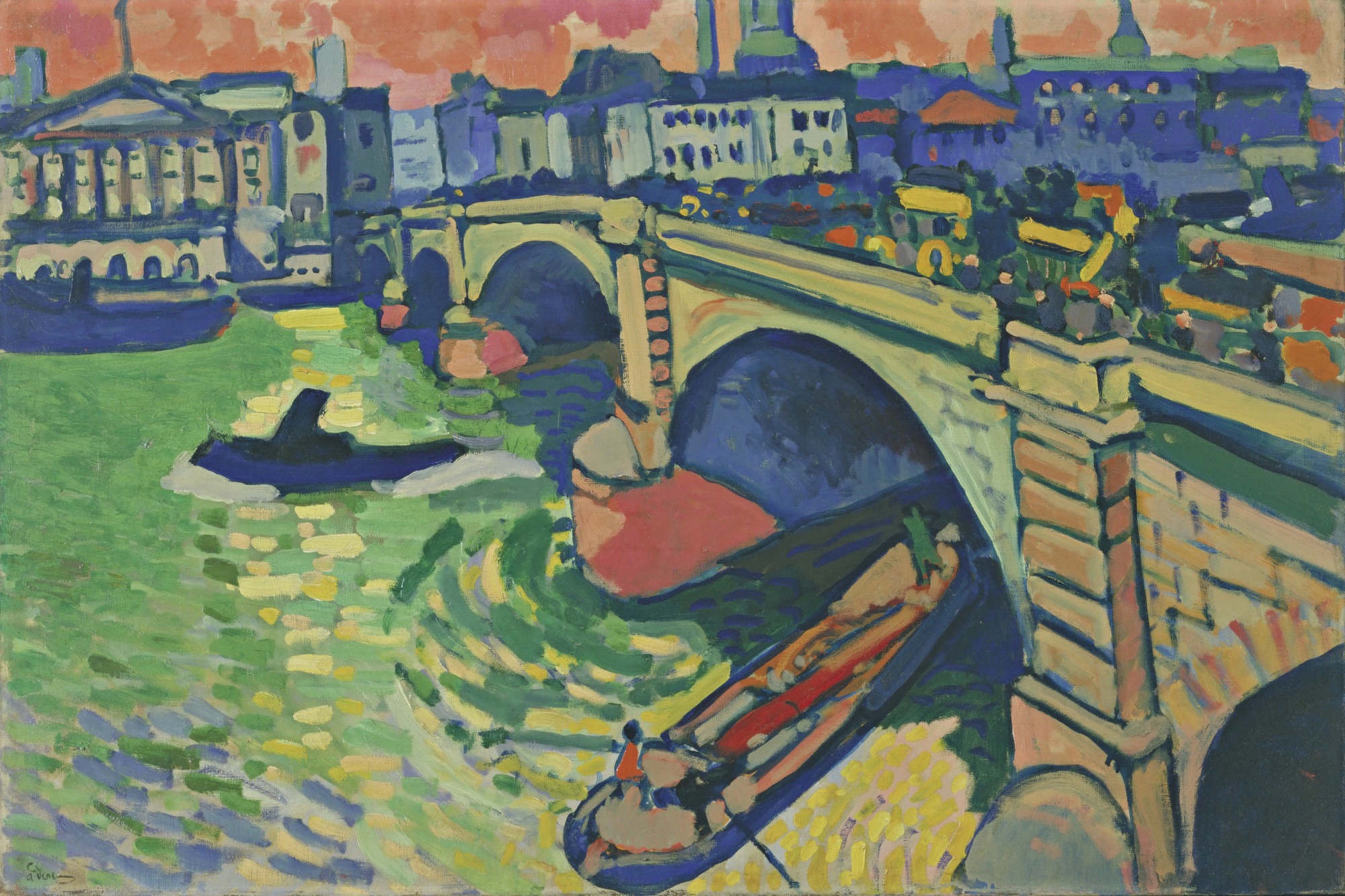
The result of her leaving the note was that we met and talked about the exhibition. I was not familiar with her work but soon realized that what she had been doing recently was more akin to the Derains in the Fauve show than the Matisses on view—which she agreed were the greater, but their surfaces more opaque and more fragmented for her to emulate.
Conversely, it was clear to me that hers were tougher than the Derains, without the weakness of their picturesque quality.
Then, having read my catalogue, she asked me—certainly to my surprise—if I would at some point be interested in writing a book about her work. Abrams had published a monograph on Frankenthaler in 1972 with a fine, short critical text by Barbara Rose. So this would be a second book, at a future date, written from the viewpoint of an art historian.
It may, or may not, be relevant that the 1972 book had been designed by Robert Motherwell before he and Helen divorced that same year. I had known Bob quite well before I met Helen, so I told him that she had asked me to do this new book. He drolly replied, “I guess she wants to get me off her coffee table.”
In 1970, Motherwell had persuaded me to edit an English version of the Dadaist Hugo Ball’s great 1927 book, Die Flucht aus der Zeit (The Flight Out of Time), for his “Documents of 20th-Century Art” series.
That became a four-year-long, fascinating but demanding process, requiring a lot of research to fact-check Ball’s numerous German sources. So, when Paul Gottleib, Abrams’s publisher, asked me at the end of 1979 if I could submit a text of 20,000 words on Helen Frankenthaler by the following October, I thought it would be a breeze. In fact, it would be ten years before it was published: not only because I had “a day job” at The Museum of Modern Art but also because it had become larger and far more ambitious in scope. The conception of that 1989 volume remains in the new one.
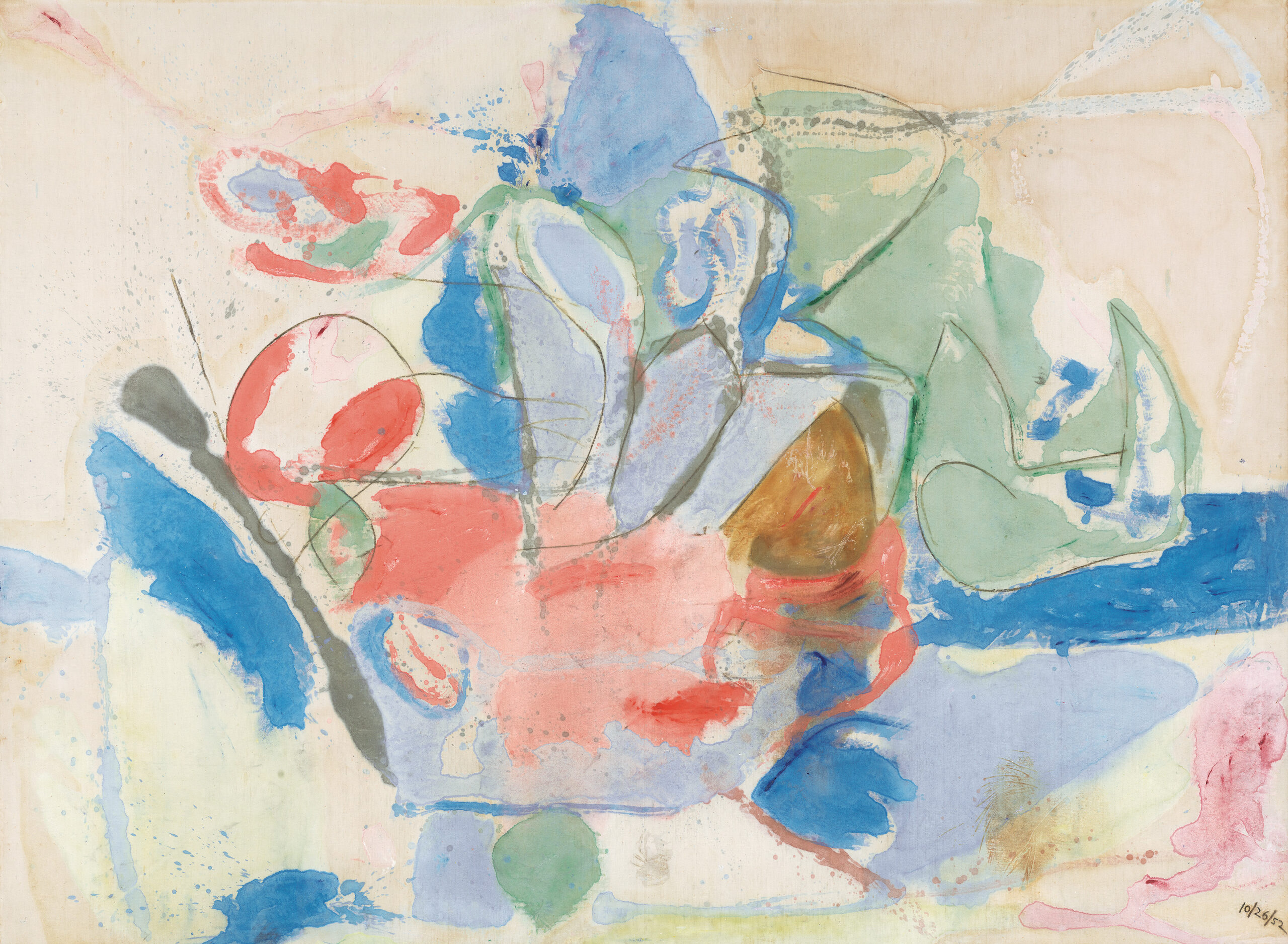
Essential to the earlier conception was addressing the common belief that Mountains and Sea, the soak-stain canvas Helen painted on October 26, 1952, was her most important, because most influential, picture. A “bridge between Pollock and what was possible” was how Morris Louis famously described it—meaning what most people came to know as Color Field painting but the critic Clement Greenberg called, in 1964, “Post-Painterly Abstraction.”
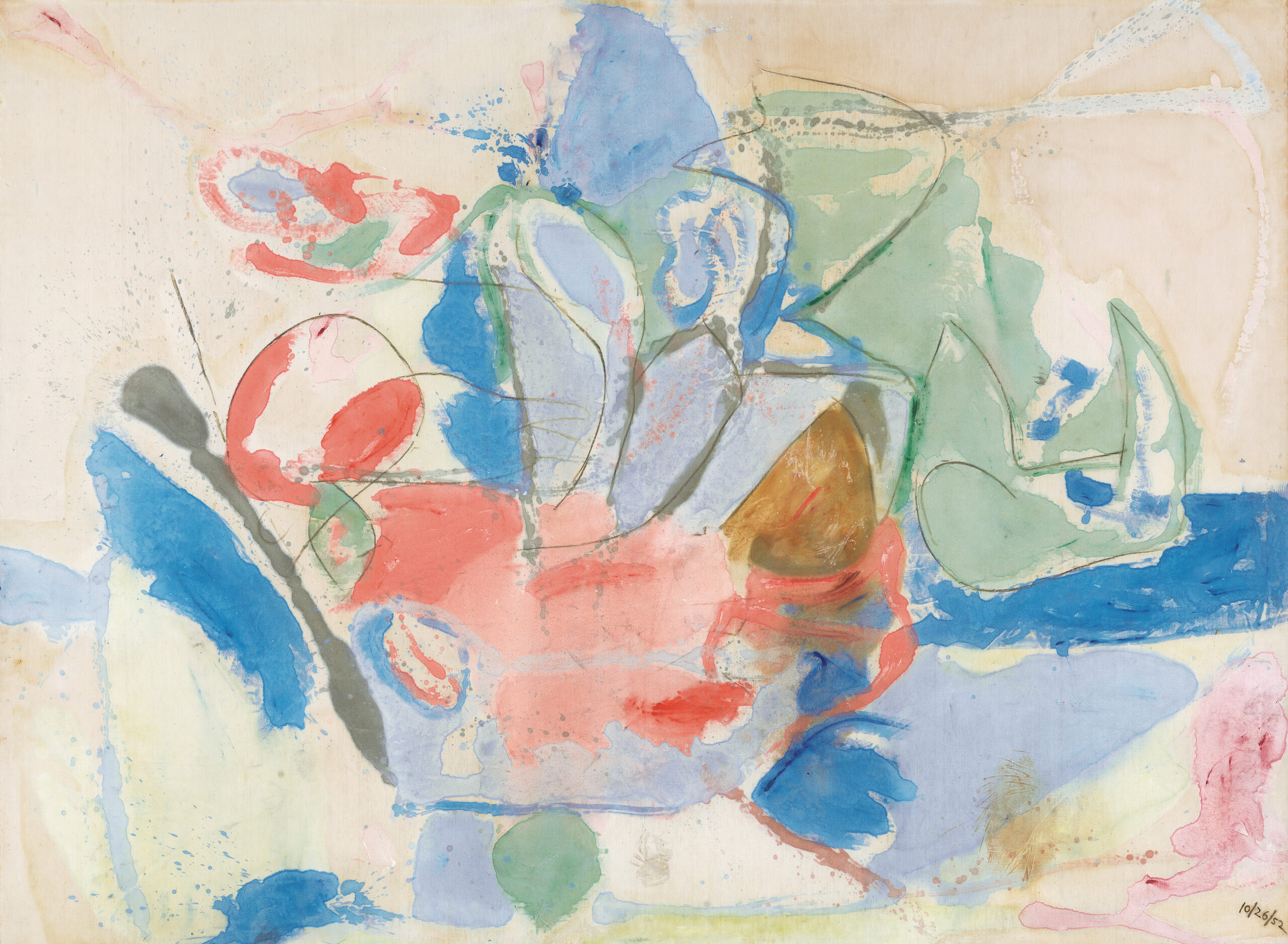
But as I began to work on the 1989 monograph—with Helen and her studio manager, Maureen St. Onge, unrolling canvases long in storage—it soon became clear that, from start to finish, most of them were not post-painterly, color-field works but painterly abstract compositions: some far more painterly than others, some less fully abstract than others, and some with explicitly representational details.
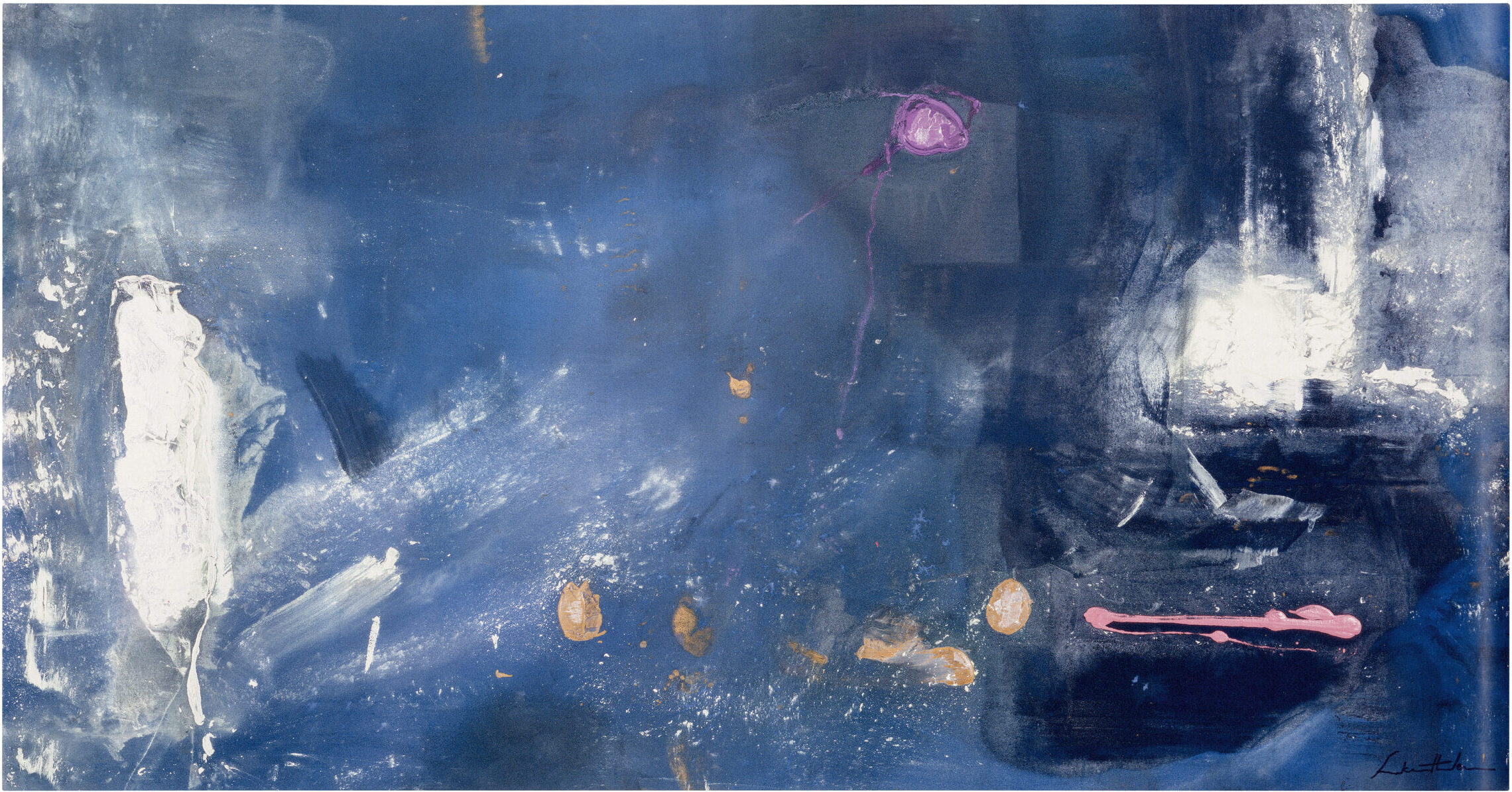
And the kind of paintings that I saw Helen making in her studio, as I was writing that first monograph, ranged from those as different as the 1979 Feather, which seemed continuous with her early soak-stain canvases, and the 1980 White Cap, which did not. Frankenthaler obviously followed Willem de Kooning’s celebrated dictum, “I have to change to stay the same.”
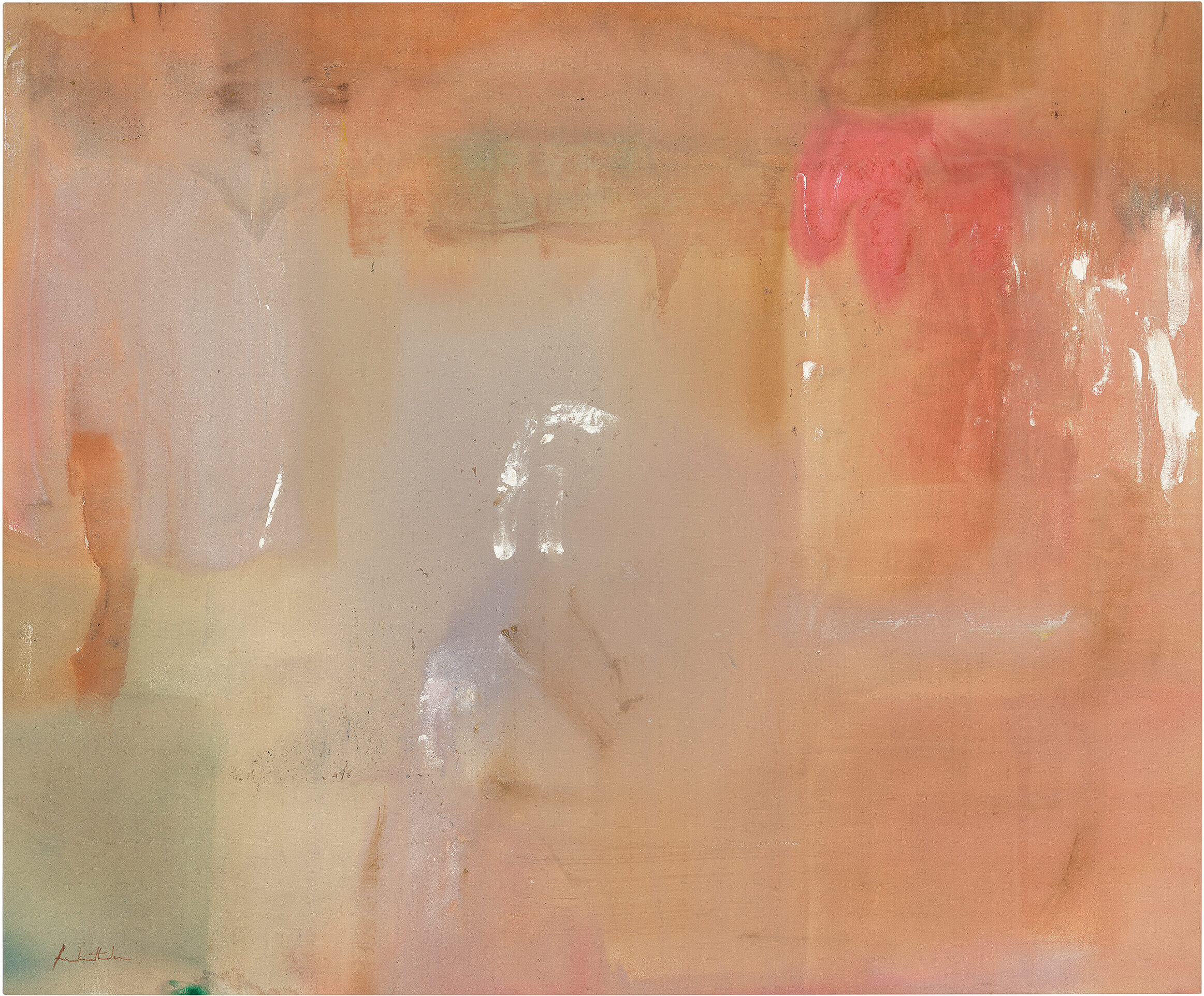
That 1989 book was originally conceived to be akin to the Rose book, with a concise critical introduction and an album of color plates. But, looking at both her earlier and most recent works, it became clear that what would be far more useful would be a full-length, evenly weighted, historical as well as critical study.
Therefore, my aim changed to a book providing a chronology of her entire painting career: after a chapter on her work and its influences before Mountains and Sea, it addressed her career in two parts, and the same is true of the new volume:
The first part follows her development in the 1950s, almost from painting to painting, which was how it advanced—roughly speaking, from her first-exhibited work, Beach, in 1950 to Italian Beach in 1960.
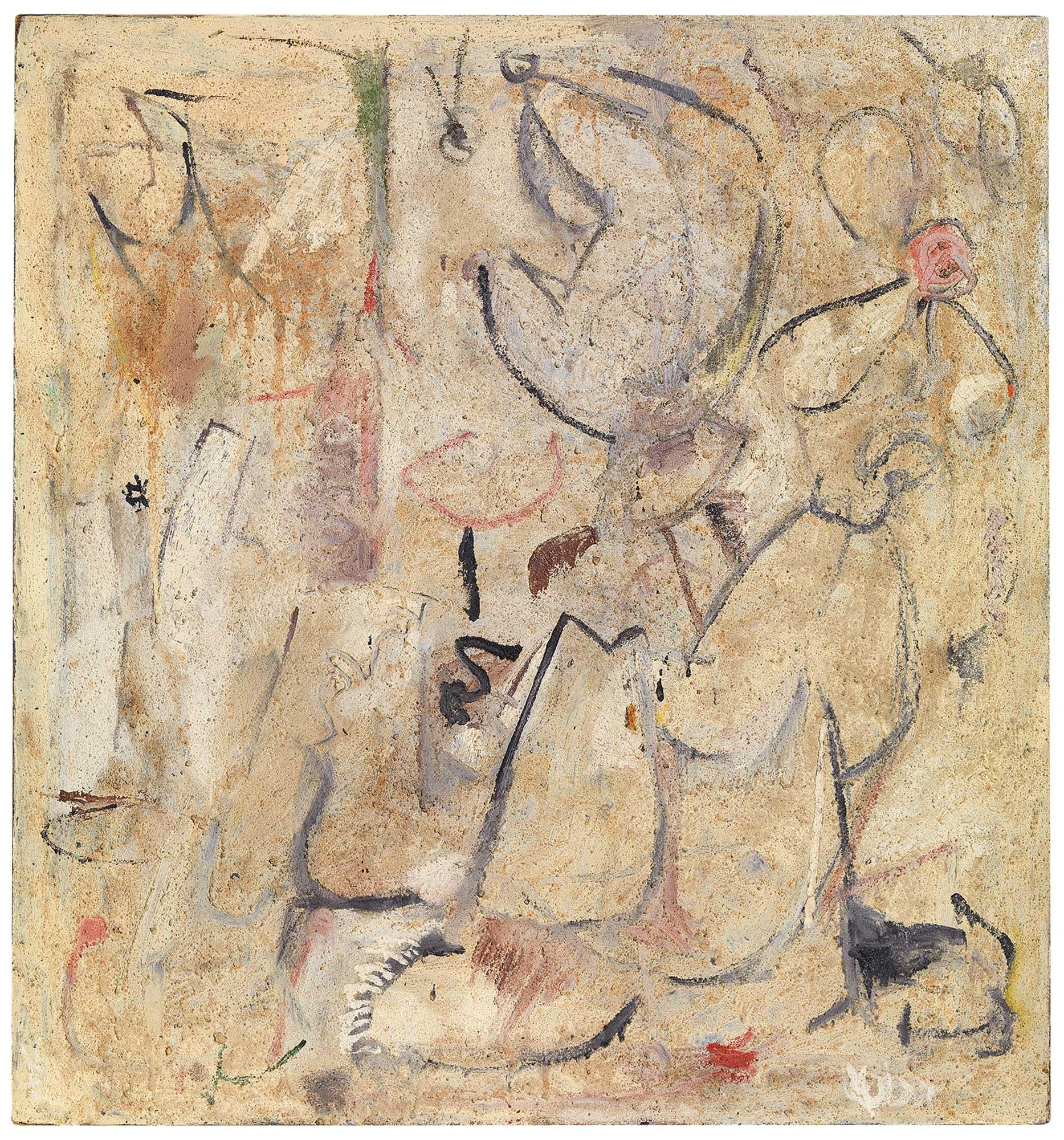
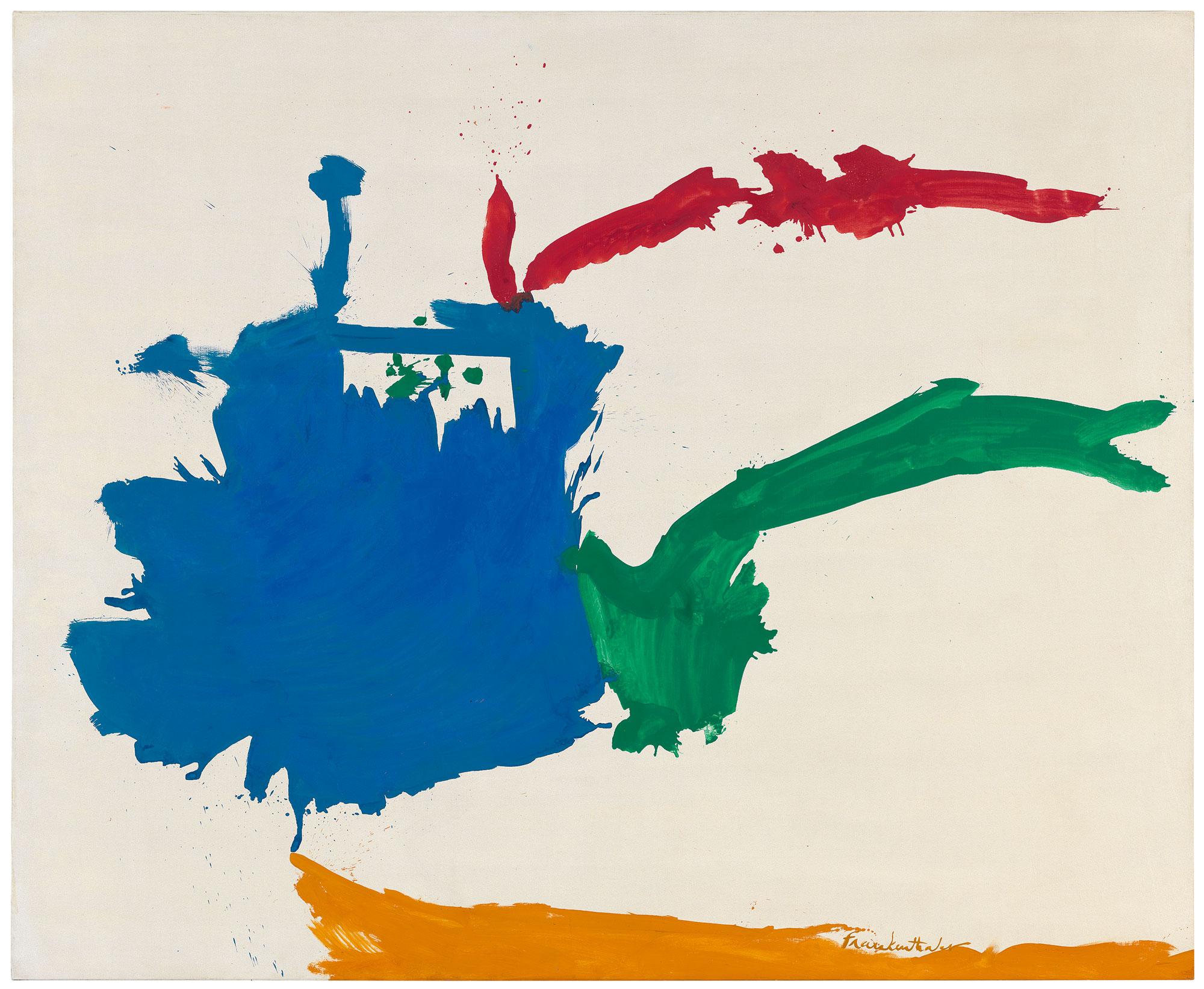
The second part more often moves from one group of paintings to another, reflecting her changed practice in later decades: from her 1961 compositions with animal images to works of a similar subject forty years later.
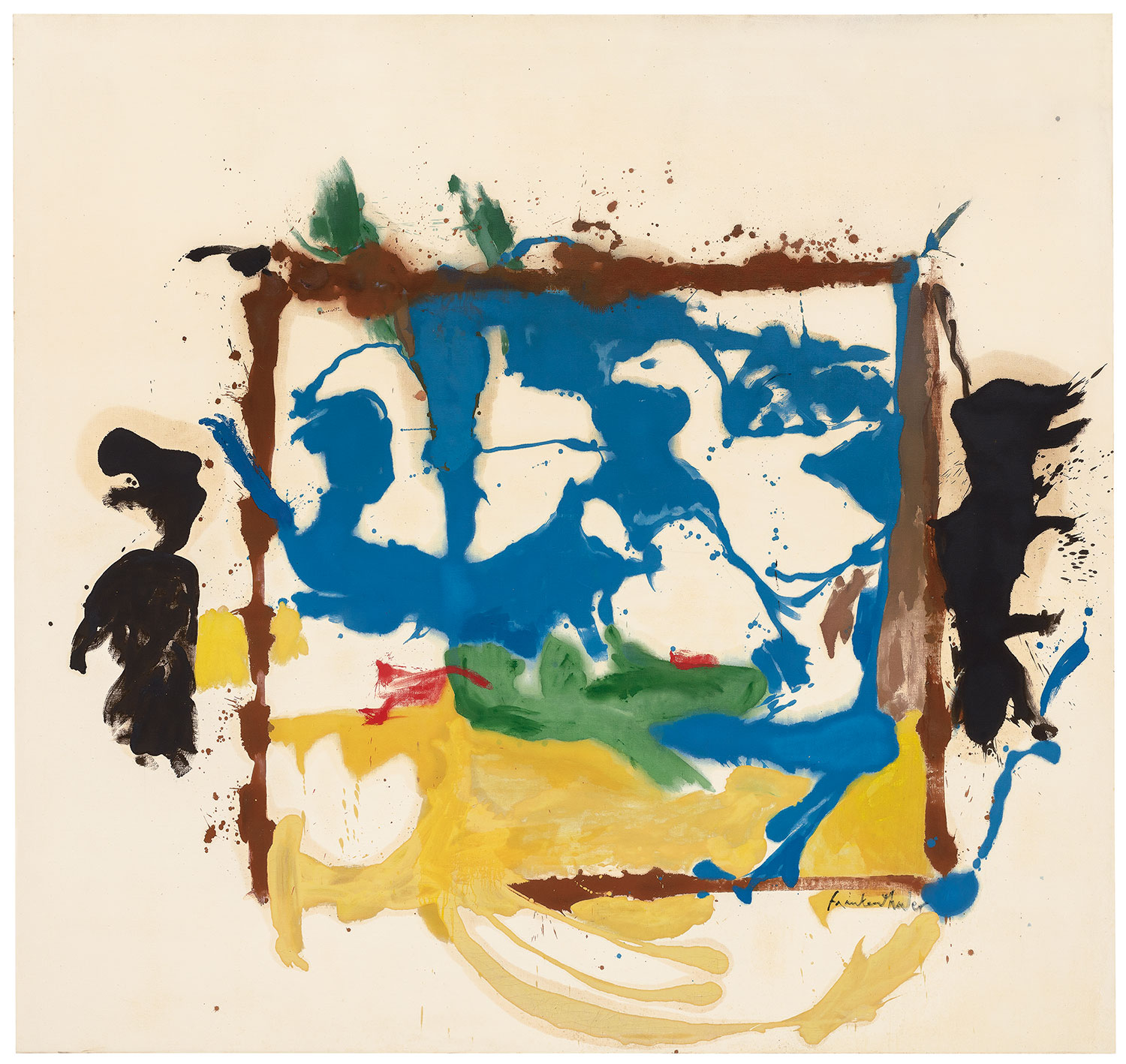
In 1960, Frank O’Hara wrote in the catalogue of Frankenthaler’s first retrospective exhibition, “One of her strengths is this very ability to risk everything on inspiration.” She herself said in 1984, “Anything is possible …. It’s all about risks, deliberate risks.” The first part of the 1989 book, and of the new one, charts the continuing inspiration that propelled her art in the 1950s; the second, the continuing risk-taking that characterized all that followed in an extraordinary development over more than half a century.
A critical component of the earlier volume, carried over into this one, was that I had the benefit of many long discussions with Helen, often in front of her work—we looked at all the works then still in her possession—and I had free access to her archives. Moreover, she read different versions of the earlier text, from draft to galley form, before its publication in 1989 and contributed to it a very great deal in the way of information, suggestions, and general advice. But then as now, my aim was to offer not only a history of Frankenthaler’s art but a particular view of it, and Helen was explicit from the start in acknowledging that the view of her art in the published text would be the responsibility of its author alone.
And she understood, of course, that any art-historical text that directly addresses works of art has to set them in an order, which may at times be for the convenience of the narration rather than the sequence in which they were made. Also that, while at times, especially in the 1960s, she made runs of similar works, what I was writing did not imply conscious, deliberate planning on her part. In fact, she wrote on a draft chapter of the 1989 volume that I had shown her, “Is it too much like a novel?” Meaning, she explained, not that it read like fiction but that it described a long and complex sequence of events that are connected in ways she was not necessarily aware of as she was working.
But I shall not attempt to summarize here the changes the new book describes in her fifty-year career. Rather, I want to say something about its difference in content from the earlier book and about some important issues in her work more fully or not considered before.
With respect to this current book’s content, I have learned and seen more than I did thirty years ago and especially so over the past decade. This came largely from curating—mainly with Lauren Mahony—five small exhibitions of Helen’s paintings with Gagosian and the Helen Frankenthaler Foundation.
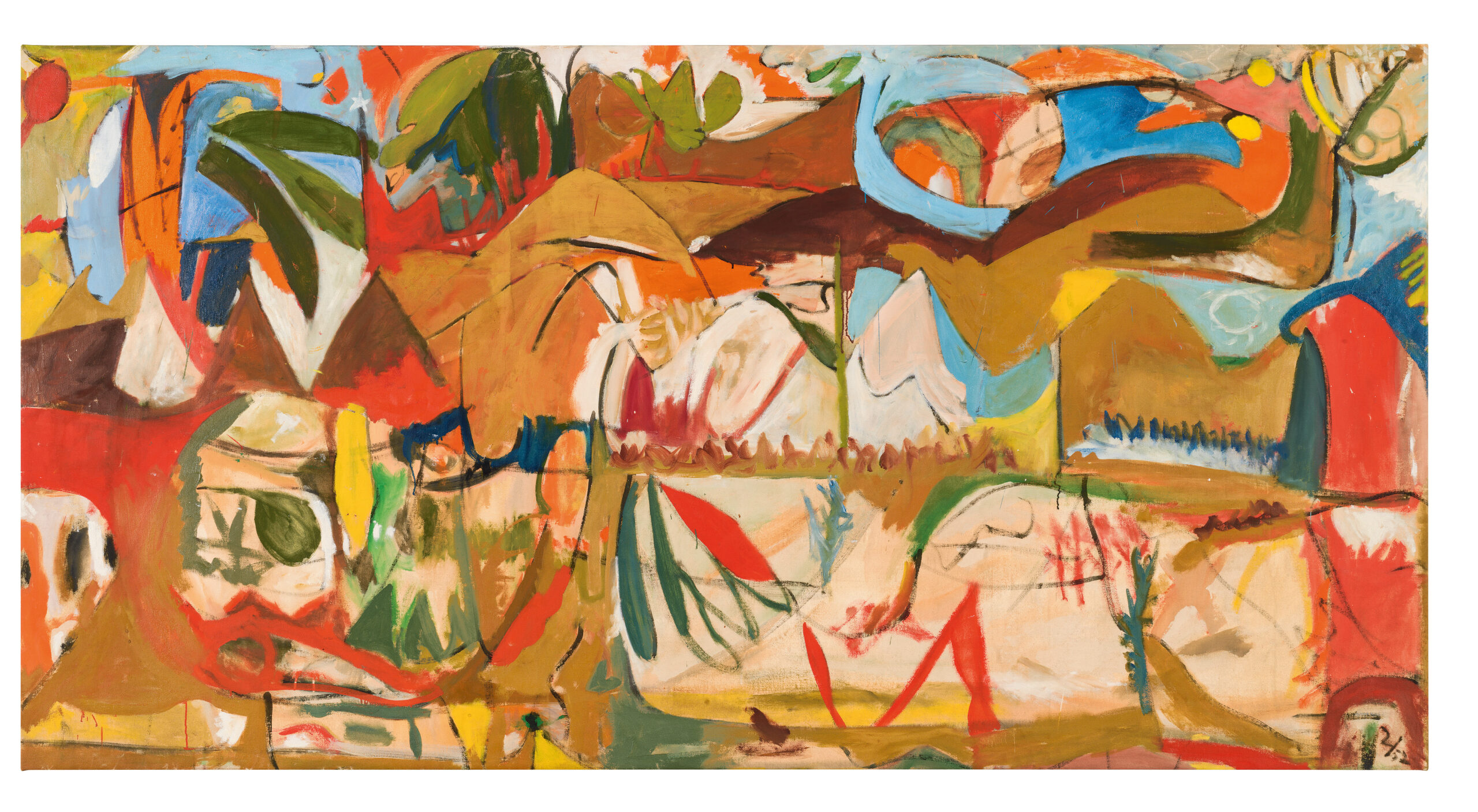
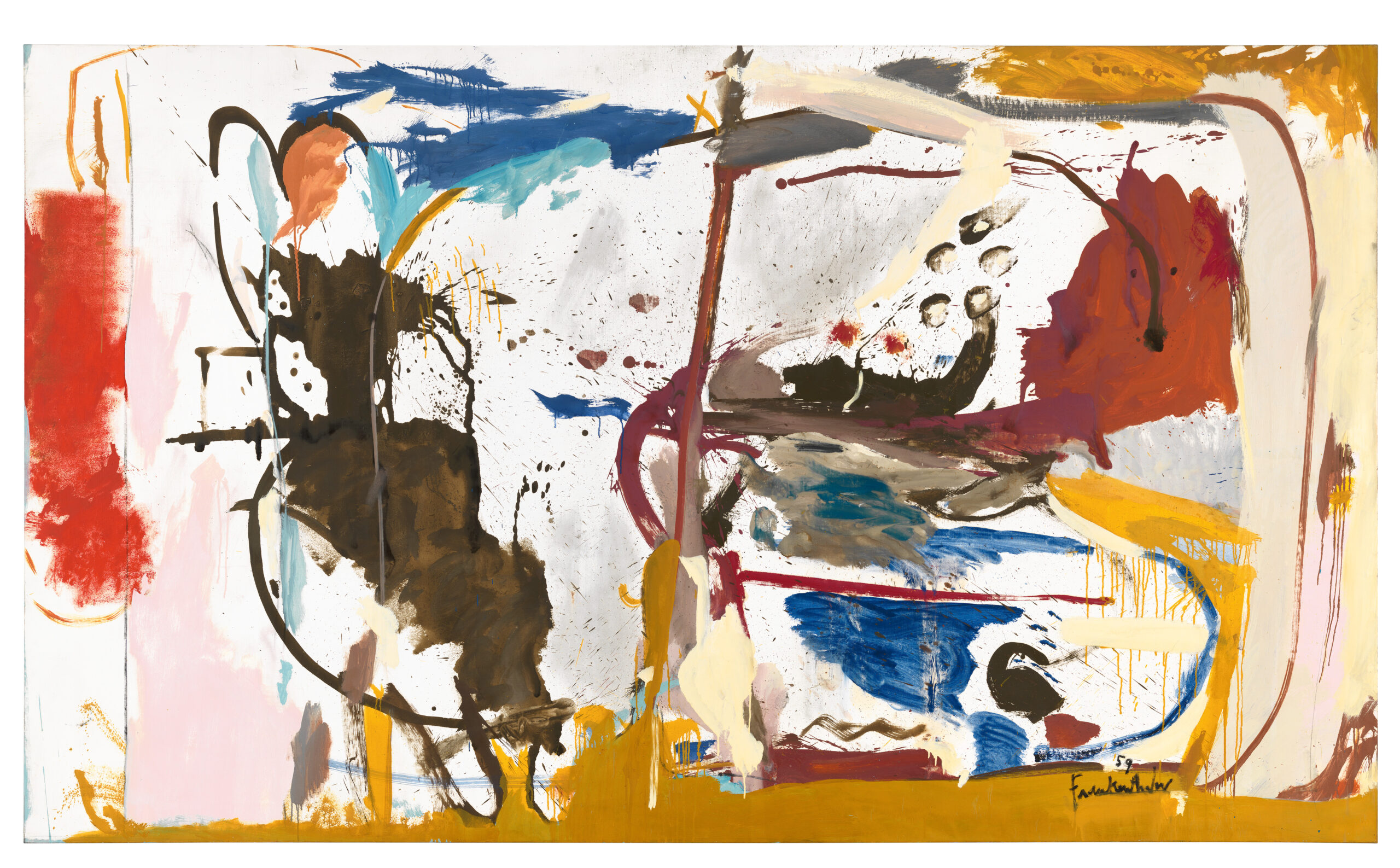
The result included adding examples of works previously unknown to me, including some painted before Mountains and Sea and others that showed Frankenthaler’s turn away from soak-stain painting at the end of the 1950s. And, of course, the new book needed a large, final chapter that addressed her art between 1989 and 2004, when she made her final works. That justified deleting the illustration of weaker and less important works in the earlier volume to make space for adequate representation of her unexpected, extraordinarily ambitious late paintings and groundbreaking prints.
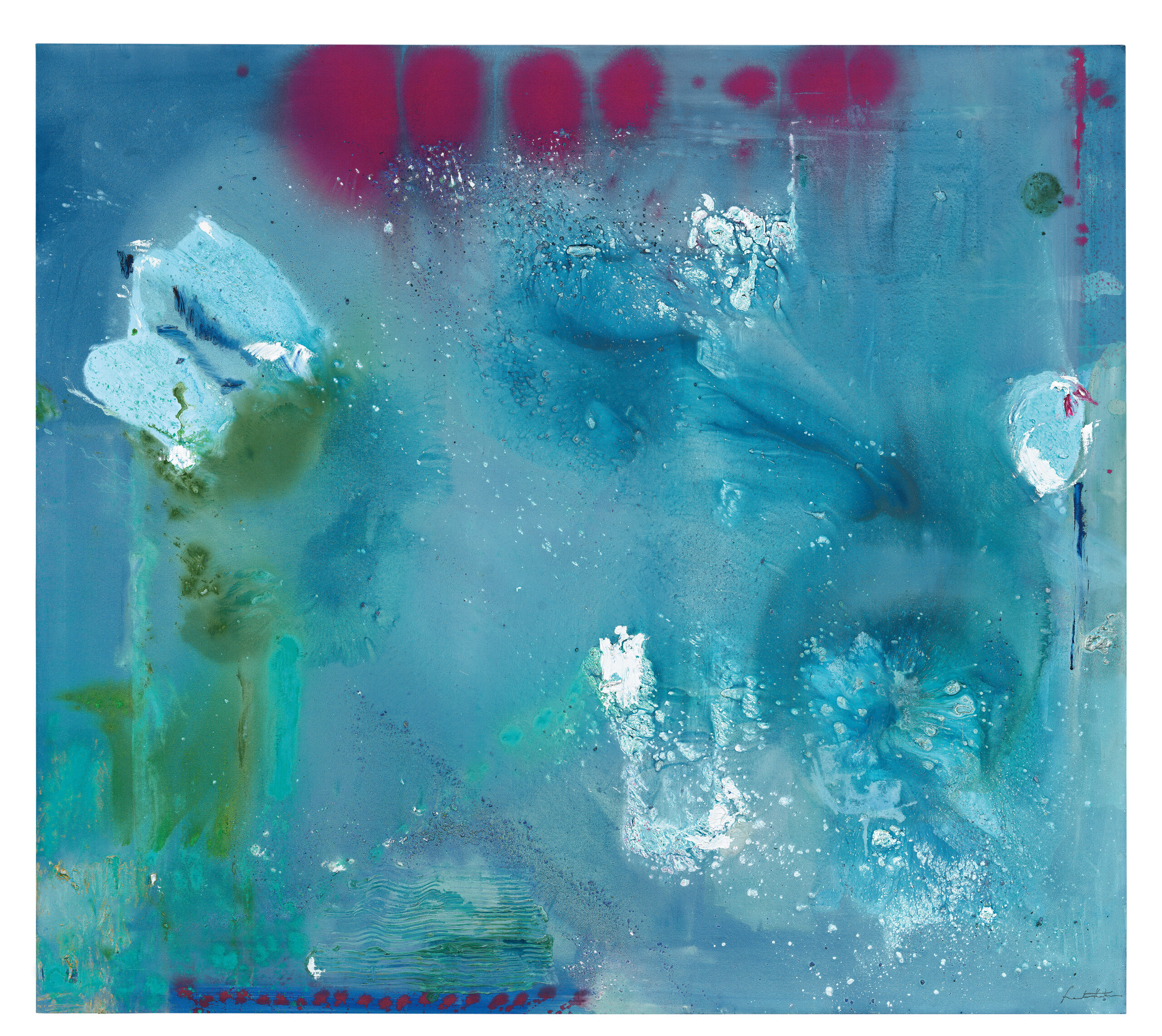
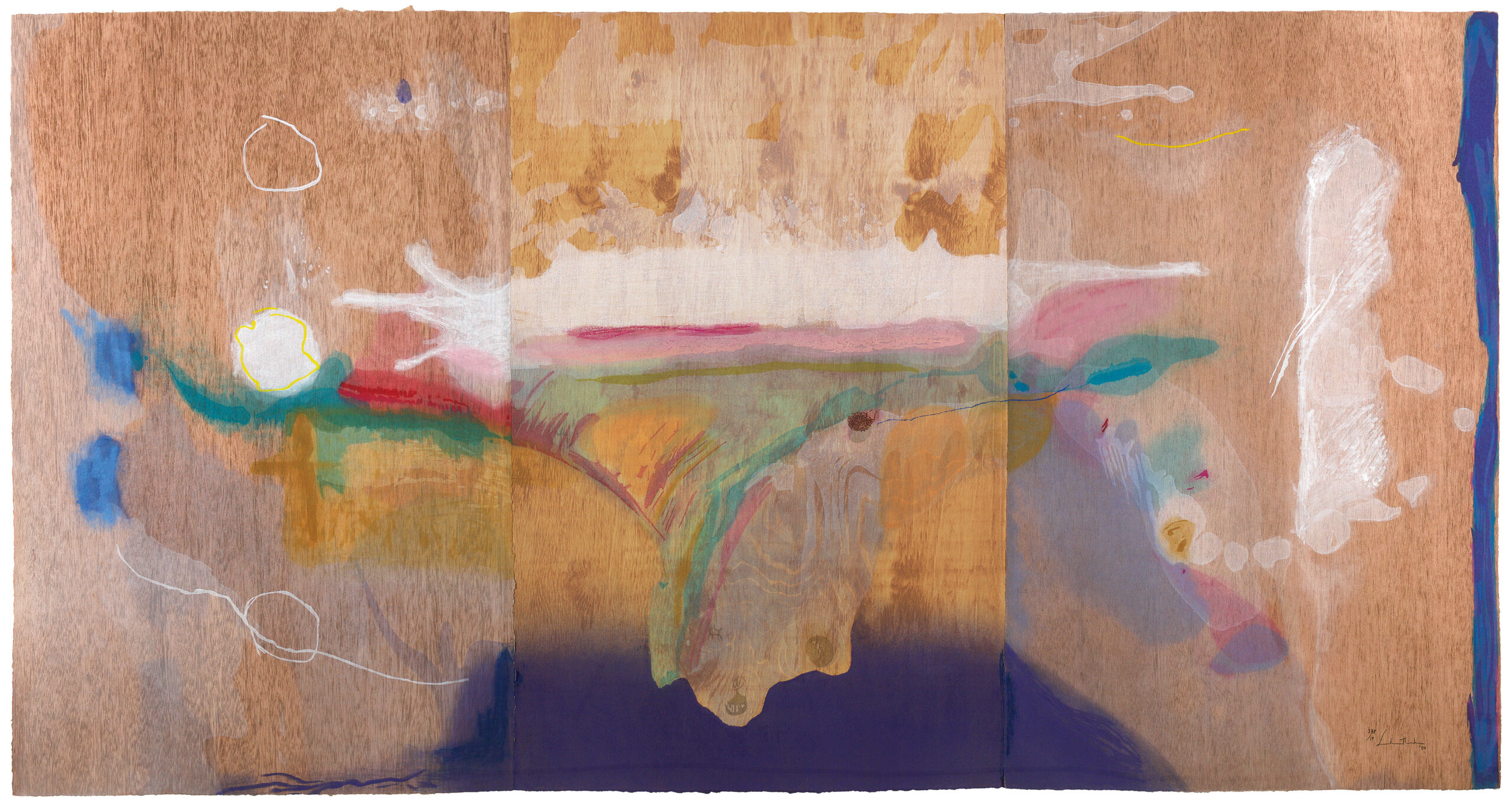
The view of Frankenthaler’s art reflected in the choice of illustrations for the original volume was the joint view of the three of us responsible for choosing them. We gave somewhat stronger emphasis to newer over older work because it was not otherwise available in book form. That imbalance has been corrected in this edition, in part to find space for post-1988 works in the new final chapter without unduly increasing the total number.
Again, I concentrate on Frankenthaler’s paintings, which constitute the core of her art. But I have maintained brief discussion of Helen’s sculpture in clay and in metal, while excluding some other ancillary activities that she had wanted in the earlier volume, from large commissioned works to ceramic plates.
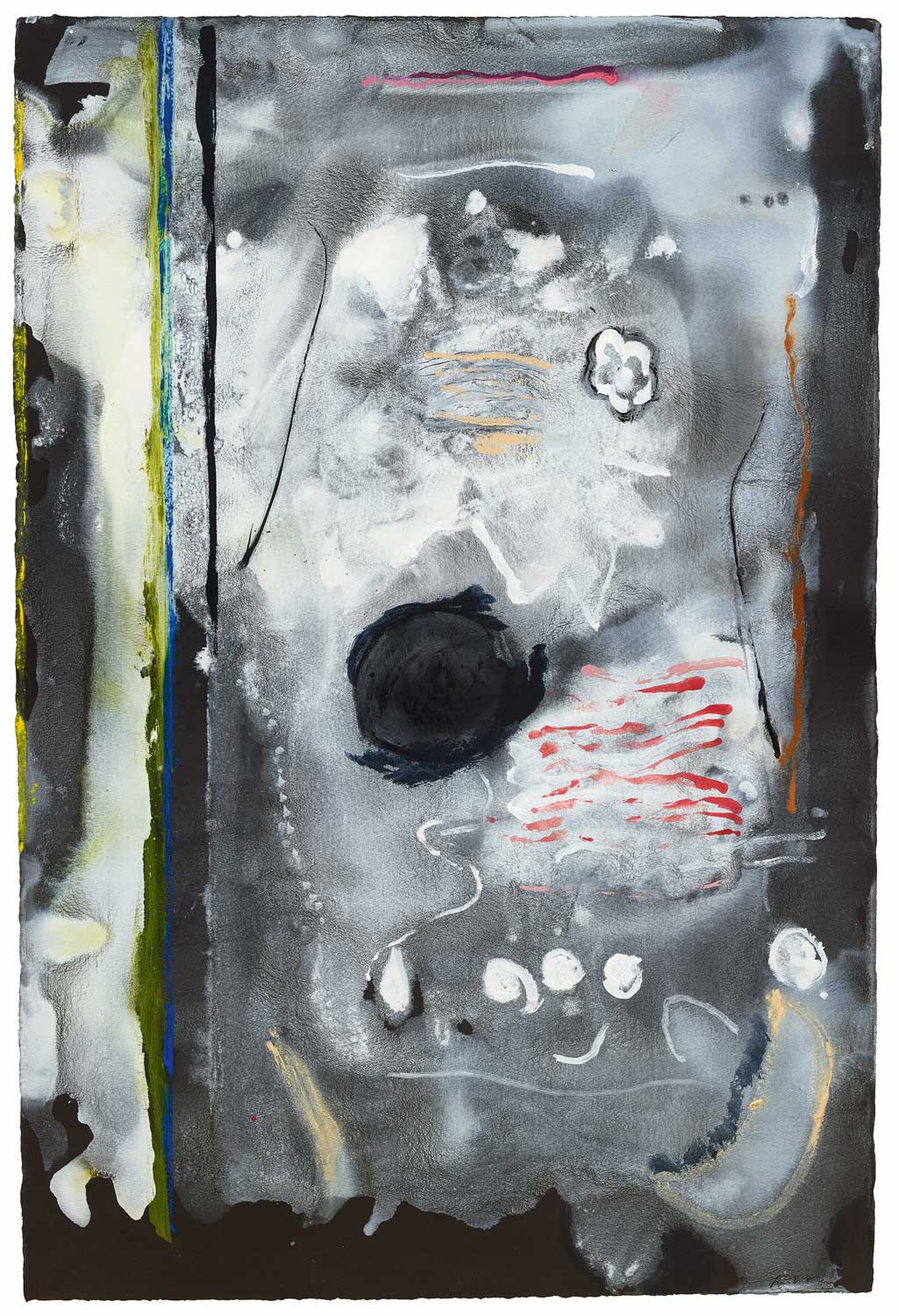
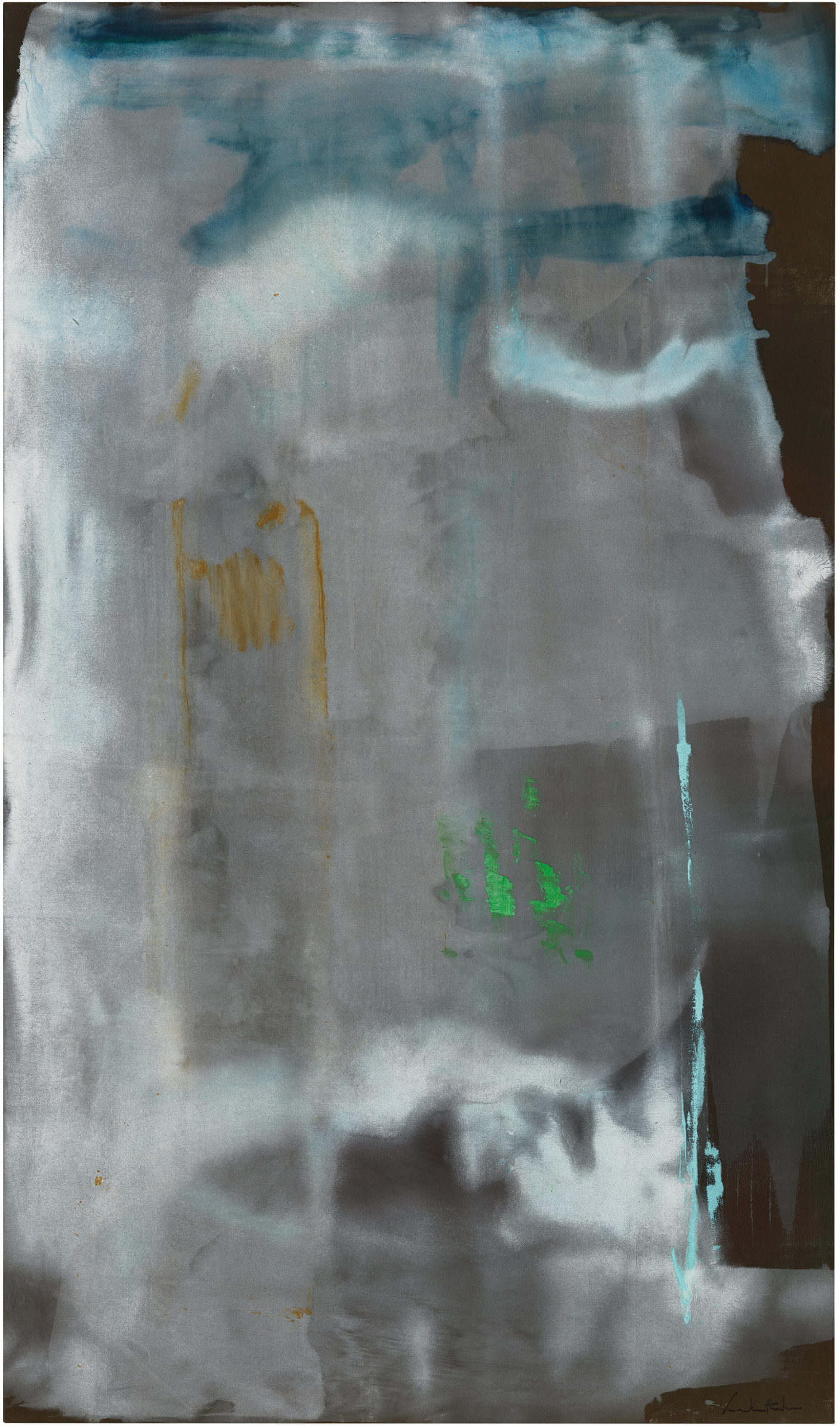
Although many separate publications do now exist on her paintings on paper, I make more mention of them than before. This was especially necessary in the final chapter, which covers the years when working on paper rather than on canvas became central to her practice. More could be said about the difference between what it was like making sometimes very large works on large tables and no longer on the floor, owing to her difficulty in bending. She joked about this, saying, “I no longer stoop to conquer.” But the means of her marking had to be different: reaching across and around the painting surface, never able to kneel—or step or lean—onto it, may account from the tighter compositions with few very long drawn lines than in earlier paintings. We shall look at some later.
Not despite but because there are now even more publications on her prints, I found myself impelled to say more about them in the new book: it is clear that she was a pioneer in especially making woodcuts and that print-making was central to her identity as an artist. There is more to be said on the reciprocal relationship of her prints and paintings.
I find it worthy of notice that, in 1963, Frankenthaler rescued some overworked paintings by turning them over and seeing what she called “a stained memory on the other side,” including parallel lines recording the floorboards on which they had laid: these paintings were effectively monoprints on a wooden matrix. It would be exactly a decade before she made her first woodcut, East and Beyond, for which she had to learn how to use a jigsaw to cut out the eight mahogany blocks from which it was printed. An accidental discovery in her studio on the one hand, a long artisanal process on the other. Thereafter, the advancement of her practice appears to have been aided by her periodically interrupting making paintings, which took only hours or days to complete, by making prints, some of which occupied her for months.
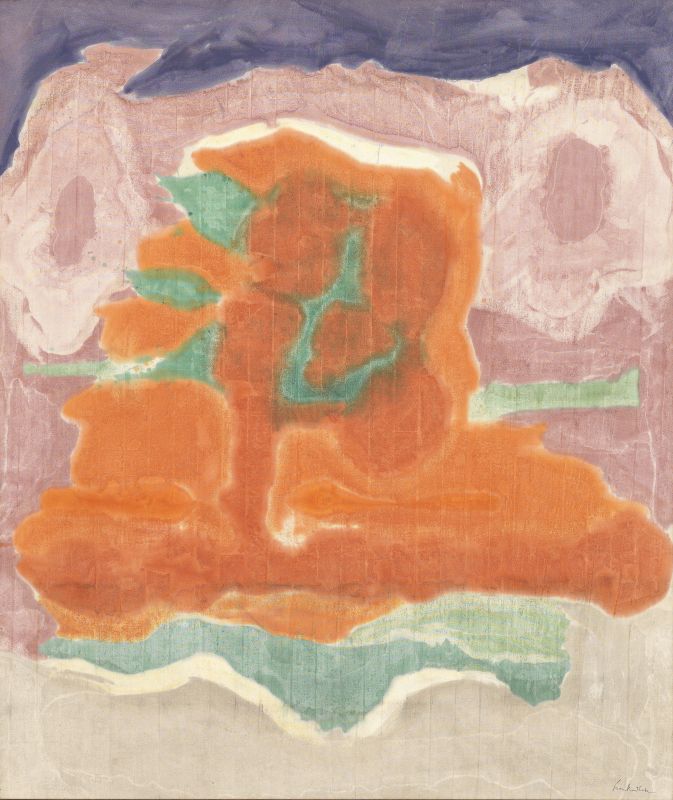
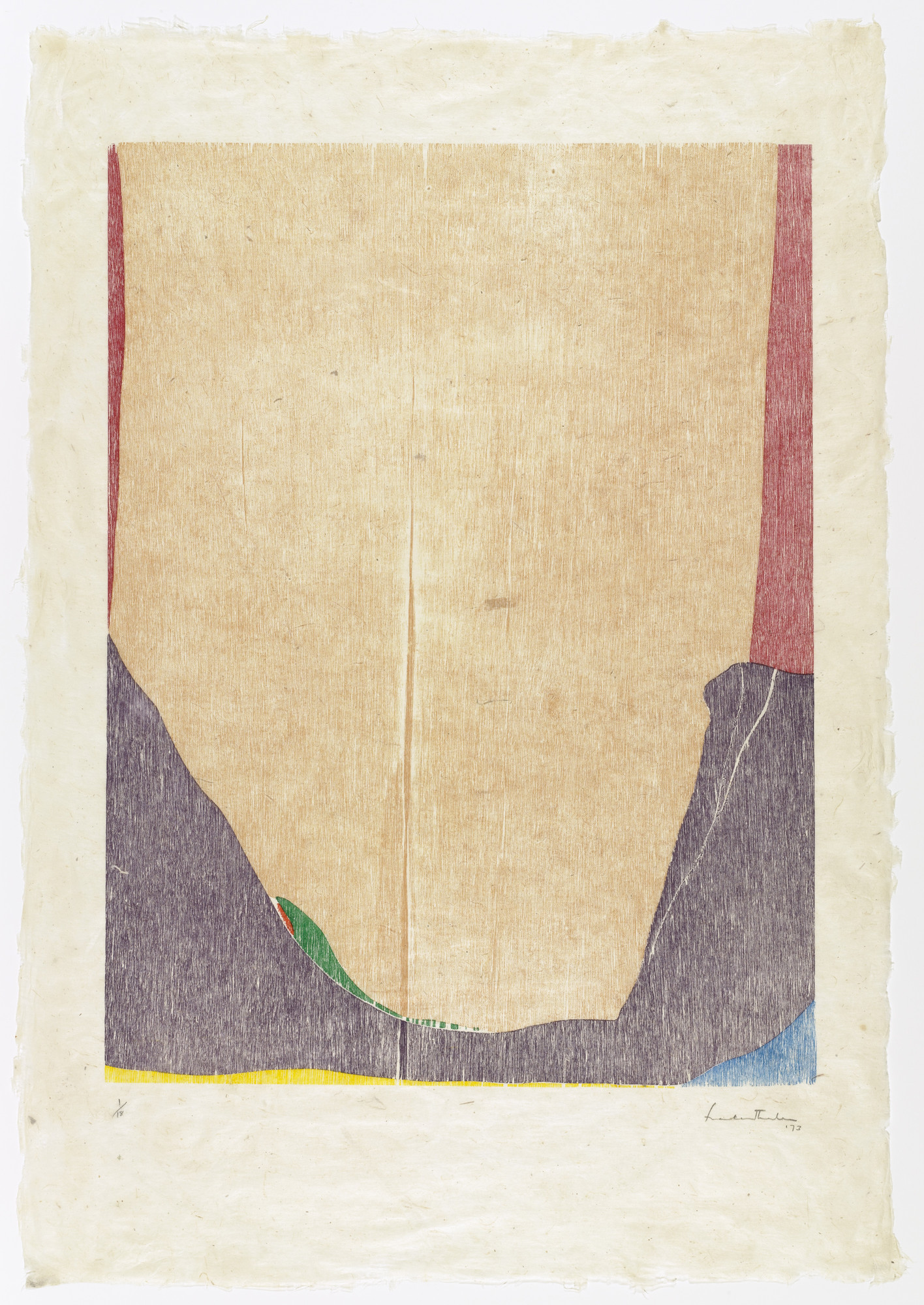
There are other topics in addition to these, which I raise in the book, that I hope someone else will be interested enough to pursue further. I said earlier that Frankenthaler made painterly abstract compositions: some far more painterly than others, some less fully abstract than others, and yet others with explicitly representational details. A case could be made that she was not, in fact, mainly an abstract painter, in the sense of making non-objective compositions, but one who made pictures with represented subjects—subjects that are represented with varying degrees of specificity at different points in her career.
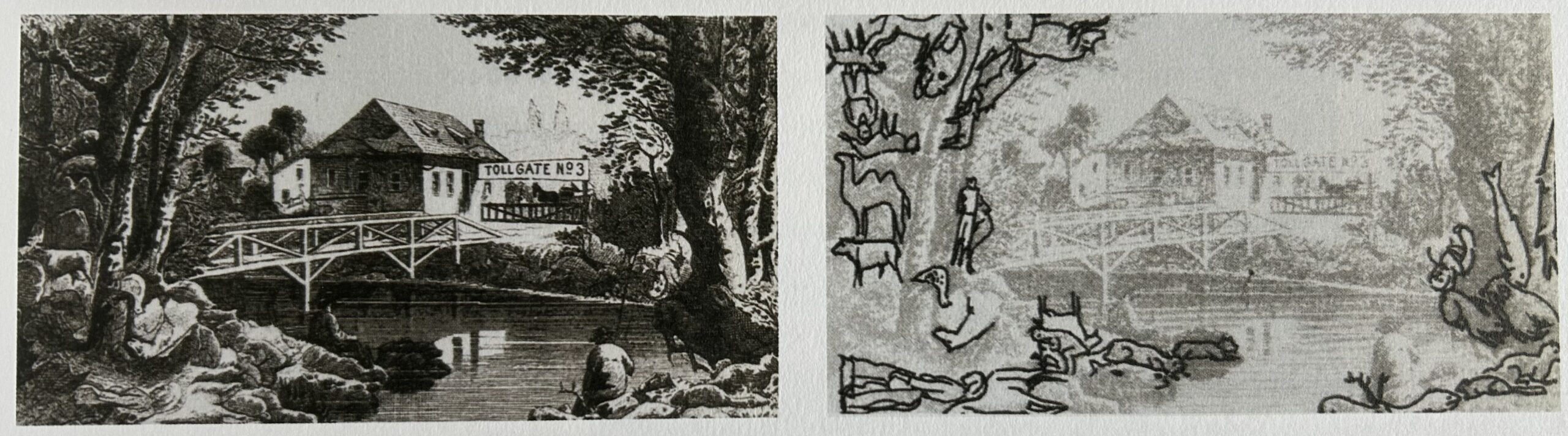
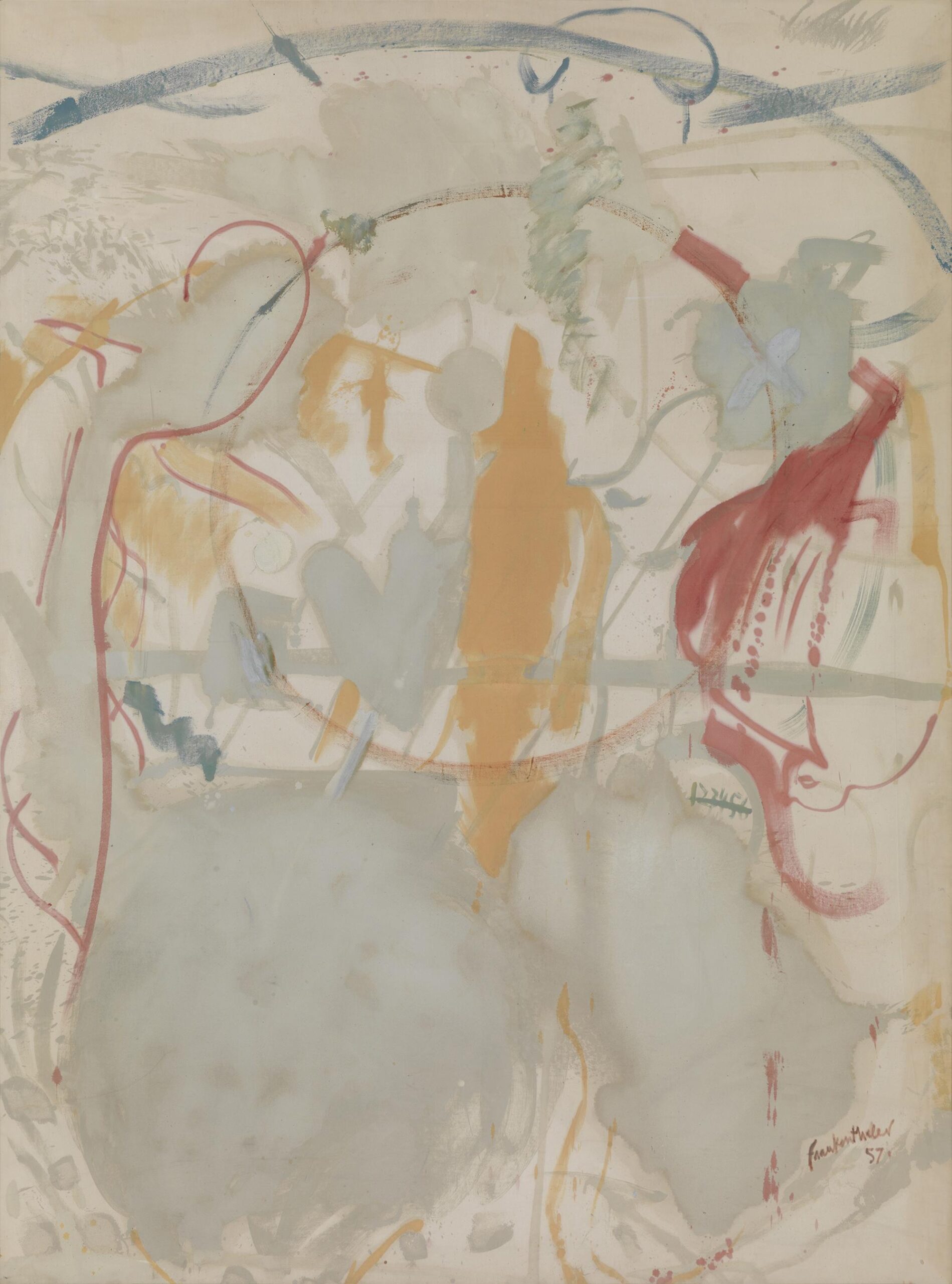
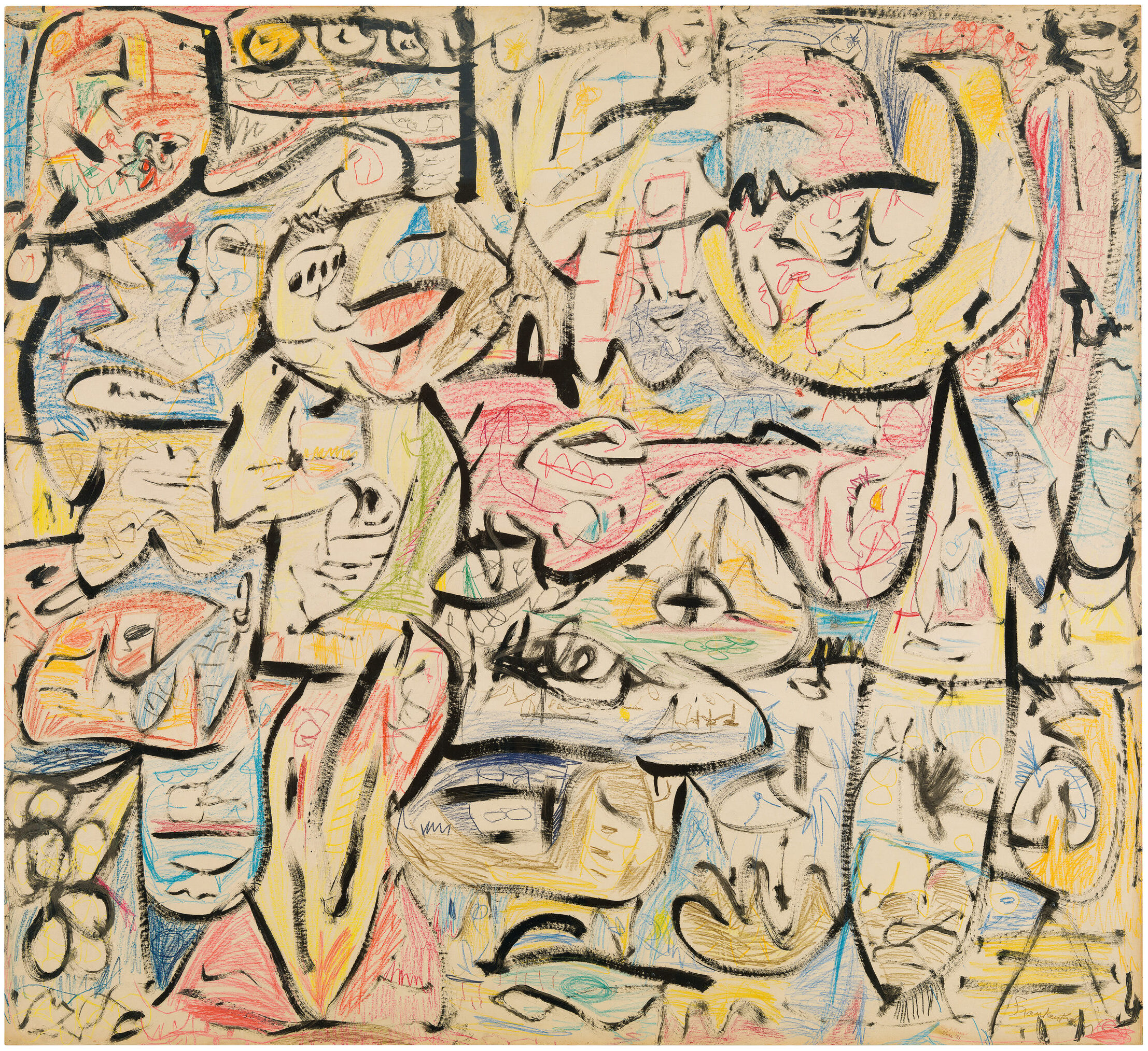
She recalled a puzzle, like this one, in a children’s magazine, that involved looking for hidden images in a picture of “what seemed to be a perfectly plain garden with a tree and a lake.” And at Bennington, she read William Empson’s celebrated book, Seven Types of Ambiguity, which speaks of ambiguity not as vagueness but as a vehicle of different types of allusion. This is what she sought for her art from an early moment; in 1957, naming a painting with the title of Empson’s book. The less-easily-found bird in the right margin is a reprise of Picasso’s famous dove of peace of 1949, around the time that Frankenthaler read Empson’s book.
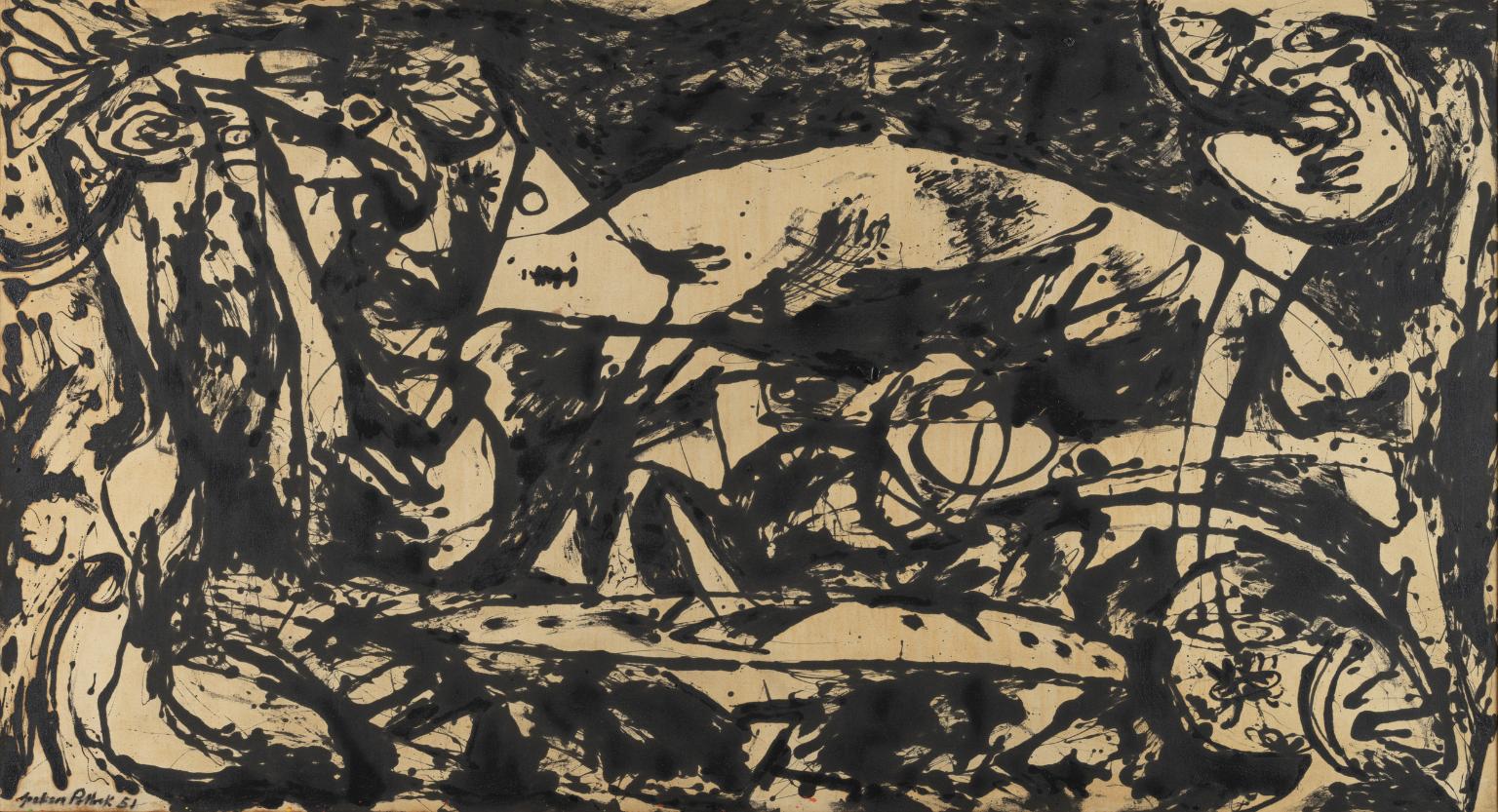
The fox in the following year’s Winter Hunt is more easily found, much more easily in fact, than in Pollock’s 1951 painting of which she said, “I saw a drawing of something like an animal or a fox, in a wood in the center of it.”
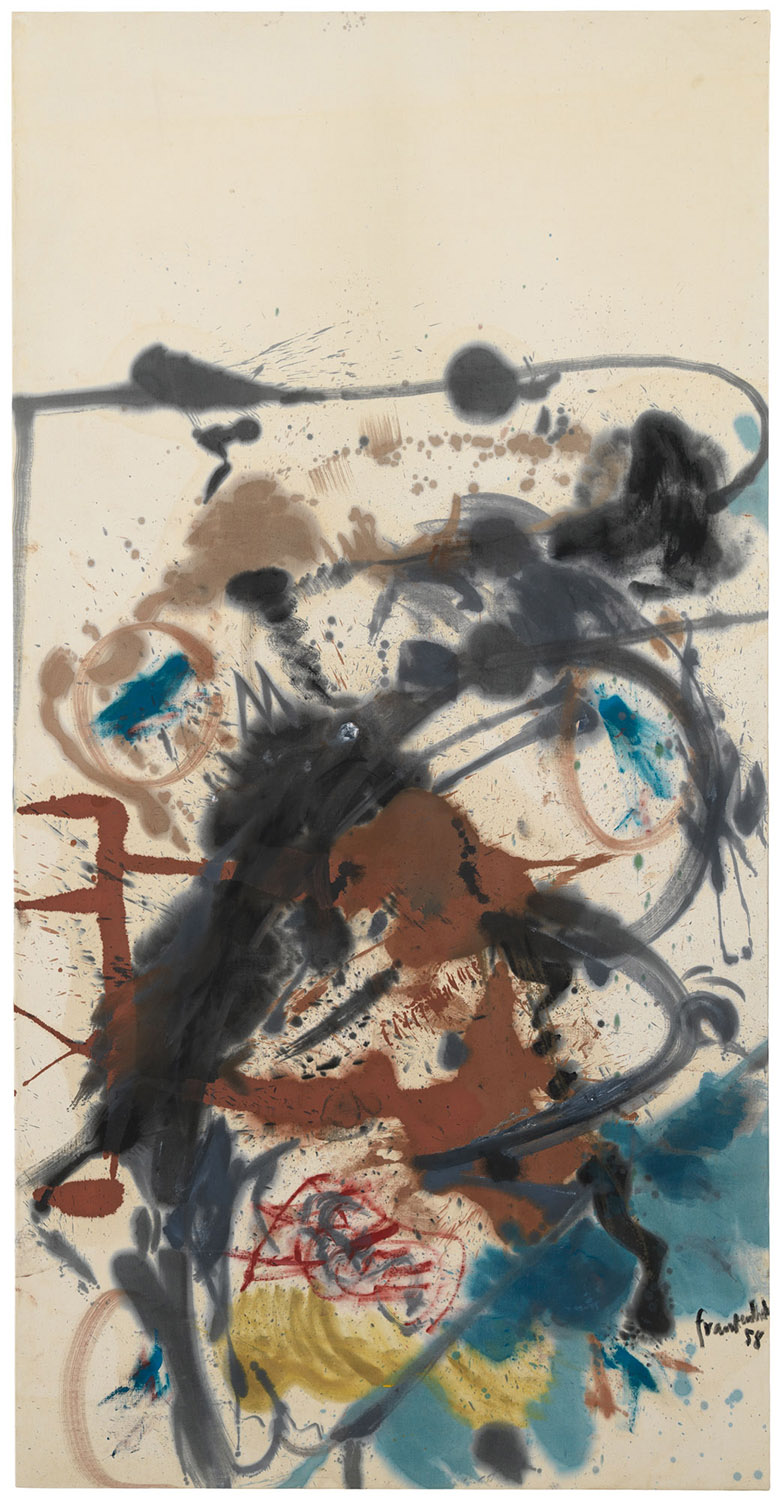
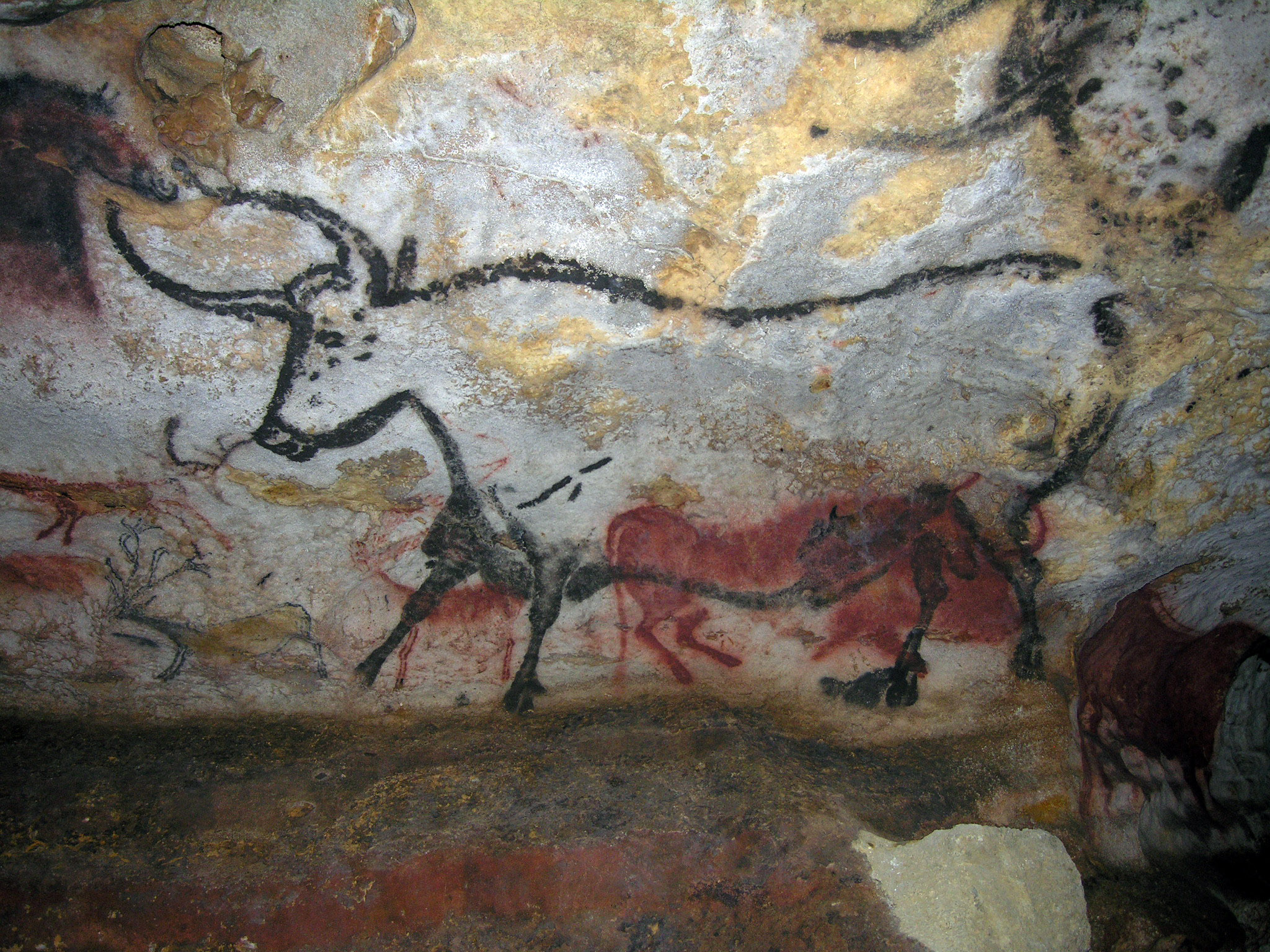
However, another 1958 painting, Hotel Cro-Magnon, differs in that the drawing simultaneously describes the famous bull at Lascaux and lays out the pictorial composition. With few later exceptions, the drawing of a source, actual or imagined, and the drawing that composes the painting are as one.
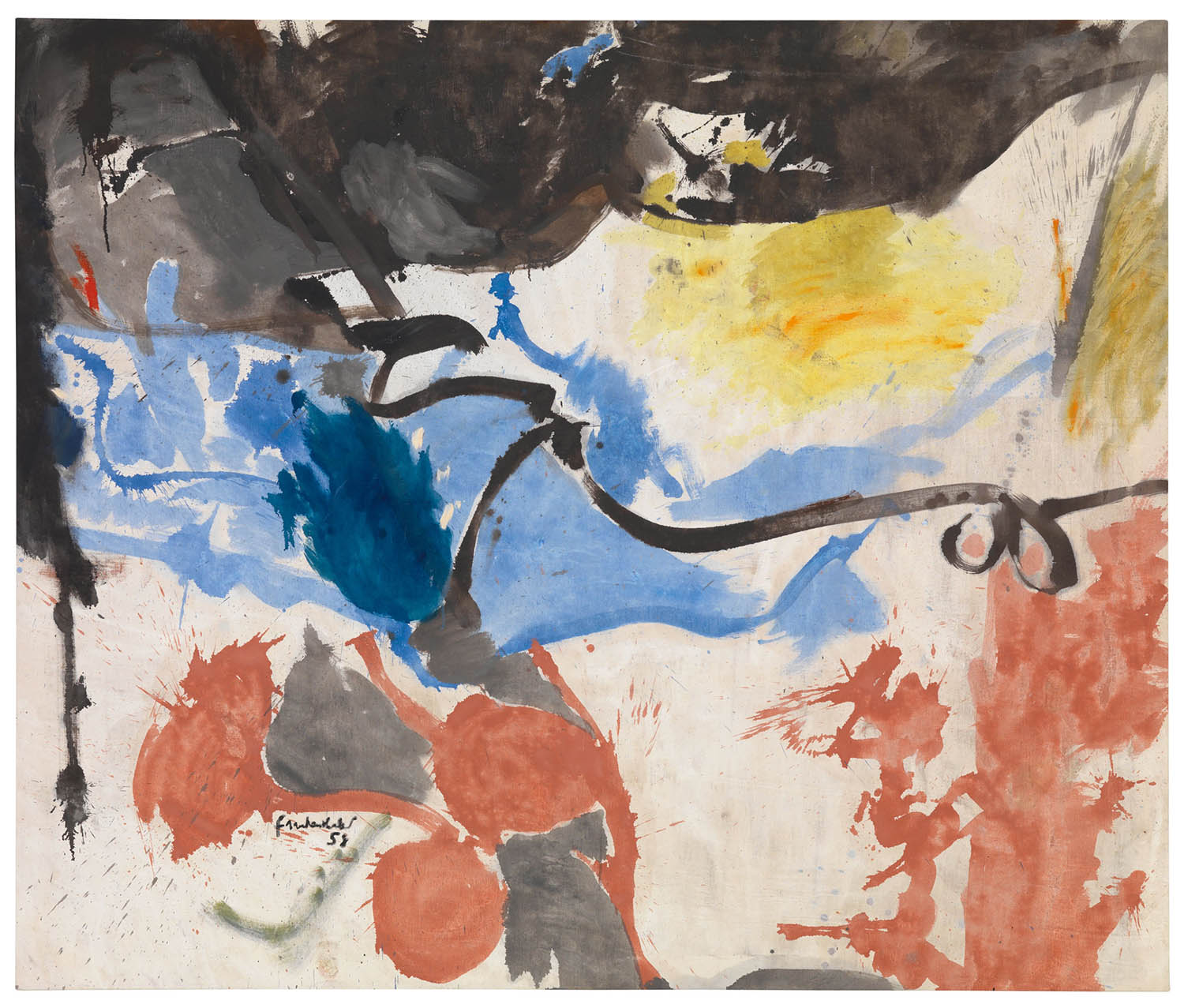
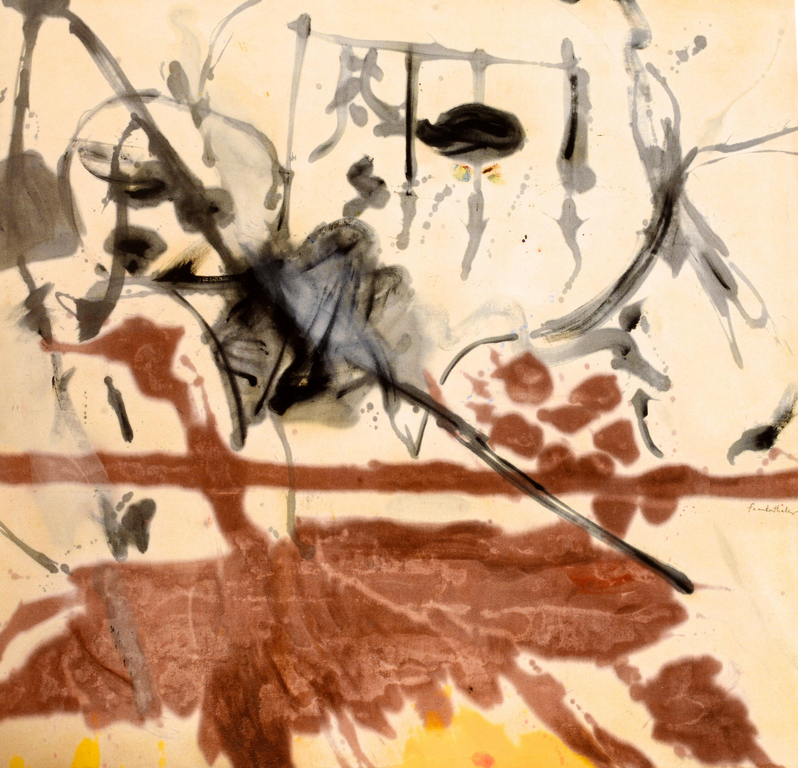
These borrowings raise the issue, which does deserve further attention, about what she marks as her own and what she tells us comes from others. Beginning in a work like the 1951 Sightseers, in which she wrote her name—and continuing in abstract paintings with the self-inscription of the artist’s moving hand—the sense of her-painting-herself is echoed in some paraphrases of Old Master paintings, including her first, the 1956 Venus and the Mirror, of which more later.
Since copying remains part of the Studio School curriculum, I want to devote some time to Frankenthaler’s references to works by other artists. Prior to painting Mountains and Sea, she had followed T.S. Eliot’s famous admonition that since “maturing consists largely of taking in and digesting various influence … a poet should subject himself to as many influences as possible.” I don’t know if this is a record, but within the space of about two years, she voraciously subjected herself to the stylistic influences of nine artists: Matisse, Picasso, Braque, Kandinsky, Miró, Gorky, Gottleib, de Kooning, and Pollock. I won’t stop to look at them here. They are discussed in the monograph but are of less interest than second group of borrowings.
As Eliot pointed out, there is an essential difference between how a poet’s ancestors assert their immortality in his work in the impressionable period when he is maturing and in his period of full maturity. In Frankenthaler’s case, some six years after painting Mountains and Sea, she began to look for ancestors not any longer among modern and contemporary painters but in work of the artists to be found in museums. And it may not be accidental that this coincided with the beginning of her full maturity as a painter.
She regularly visited museums in Europe as well as in the United States and from the date of her first European trip after painting Mountains and Sea was wondering what the past could teach her even if, as she put it, the real stuff is going on in New York.
I write in the new book how, in the years 1954–56, she turned her back on soak-stain painting to make more conventionally Abstract Expressionist heavily-impastoed works. Is it a coincidence, then, that she made three other paraphrases of great early European paintings after Venus with a Mirror in the latter part of that decade, even as she returned to soak-stain painting to make great run of them through the rest of the decade? For any painting with a recognizable external subject, we reasonably ask ourselves where the artist stands in relationship to her material. However, with works of paraphrase, we cannot but ask ourselves where the artist stands in relationship to the culture of representation to which they belong. And why and when an artist may want to affirm that relationship.
In any event, after the 1950s her paraphrases of early paintings stop, not to begin again until the mid-1970s. In this case, we may surmise that her having pushed abstraction to great, non-referential simplification by the end of the 1960s led her to want to re-engage with her roots. She began this in 1971 by alluding to an earlier artist, Matisse, without referring to a particular Matisse painting.
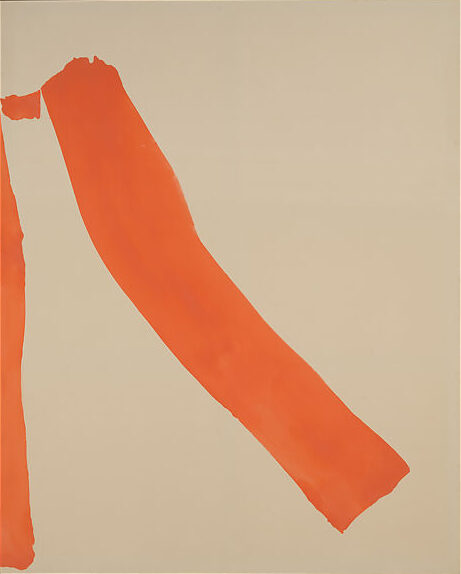
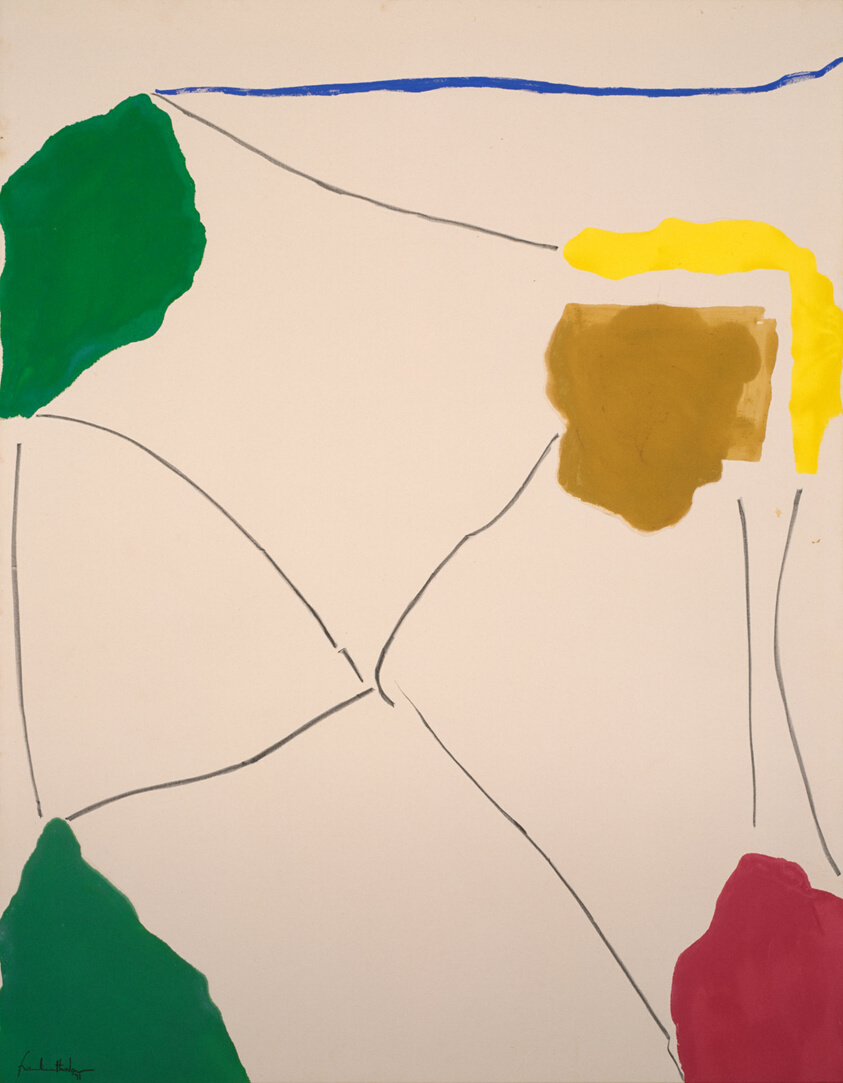
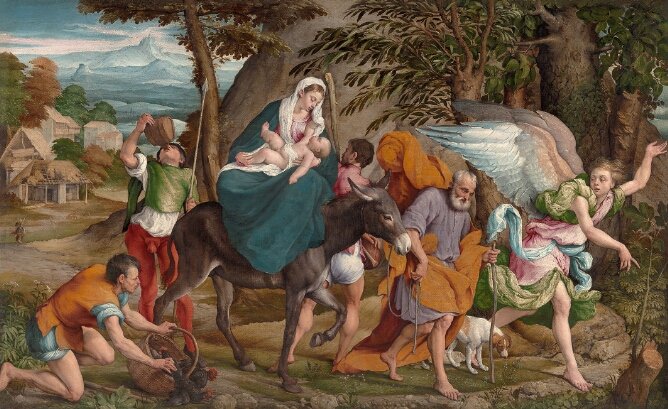
But two years later, she returned to paraphrase in the context of landscape abstraction when she based a fragment of the sky over distant mountains in Bassano’s Flight into Egypt of c. 1544–45 to paint her 1973 Hint from Bassano.
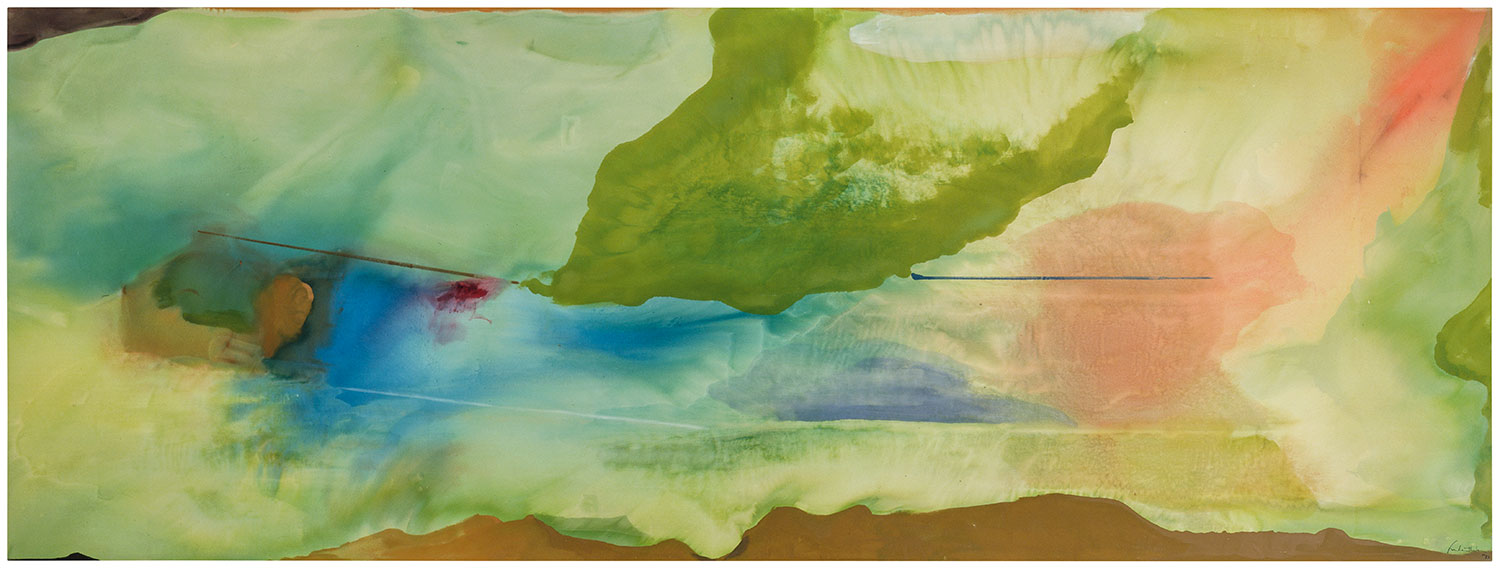
Then, in the decade from 1979 to 1988, excluding a print based on a Degas and a sculpture based on a Matisse, Frankenthaler produced ten paraphrases of historical compositions: in sequence, by Titian (again) and Manet, Rembrandt, Manet (again), Hiroshige, Zurburan, Matisse, Piero della Francesca, Zurburan (again), and Degas. I find it interesting that the first and last were based on paintings of women. But the sequence as a whole is heavily loaded towards a newly personal form of the painterly painting that she had briefly engaged in the mid-1950s.
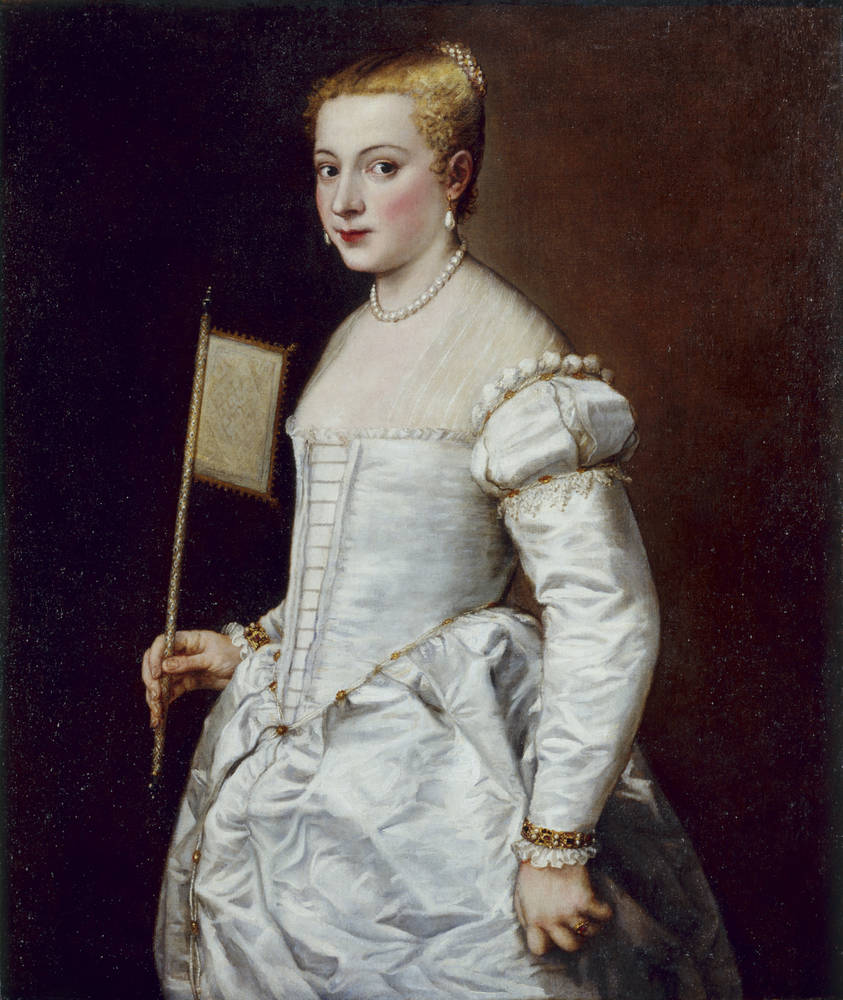
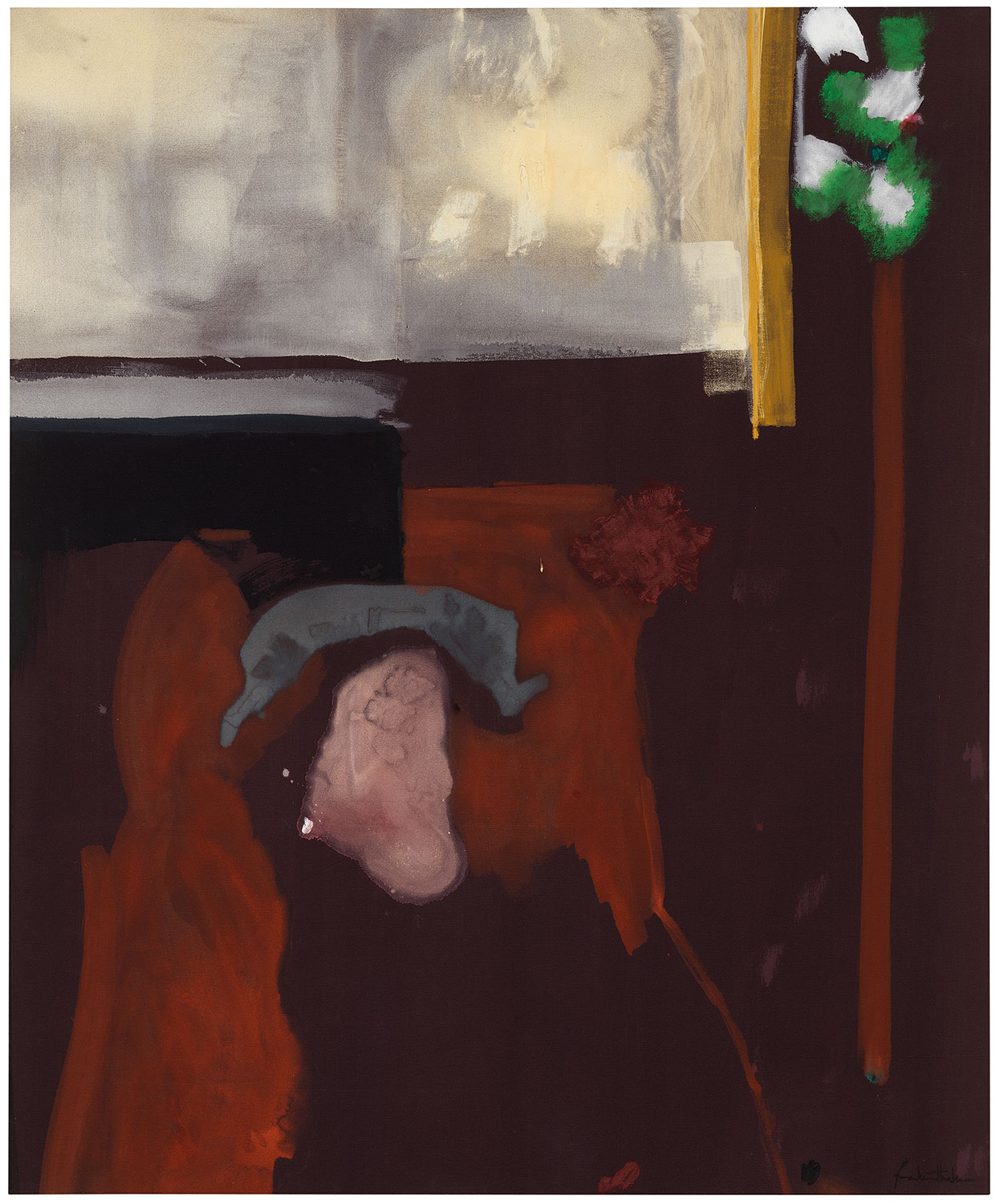
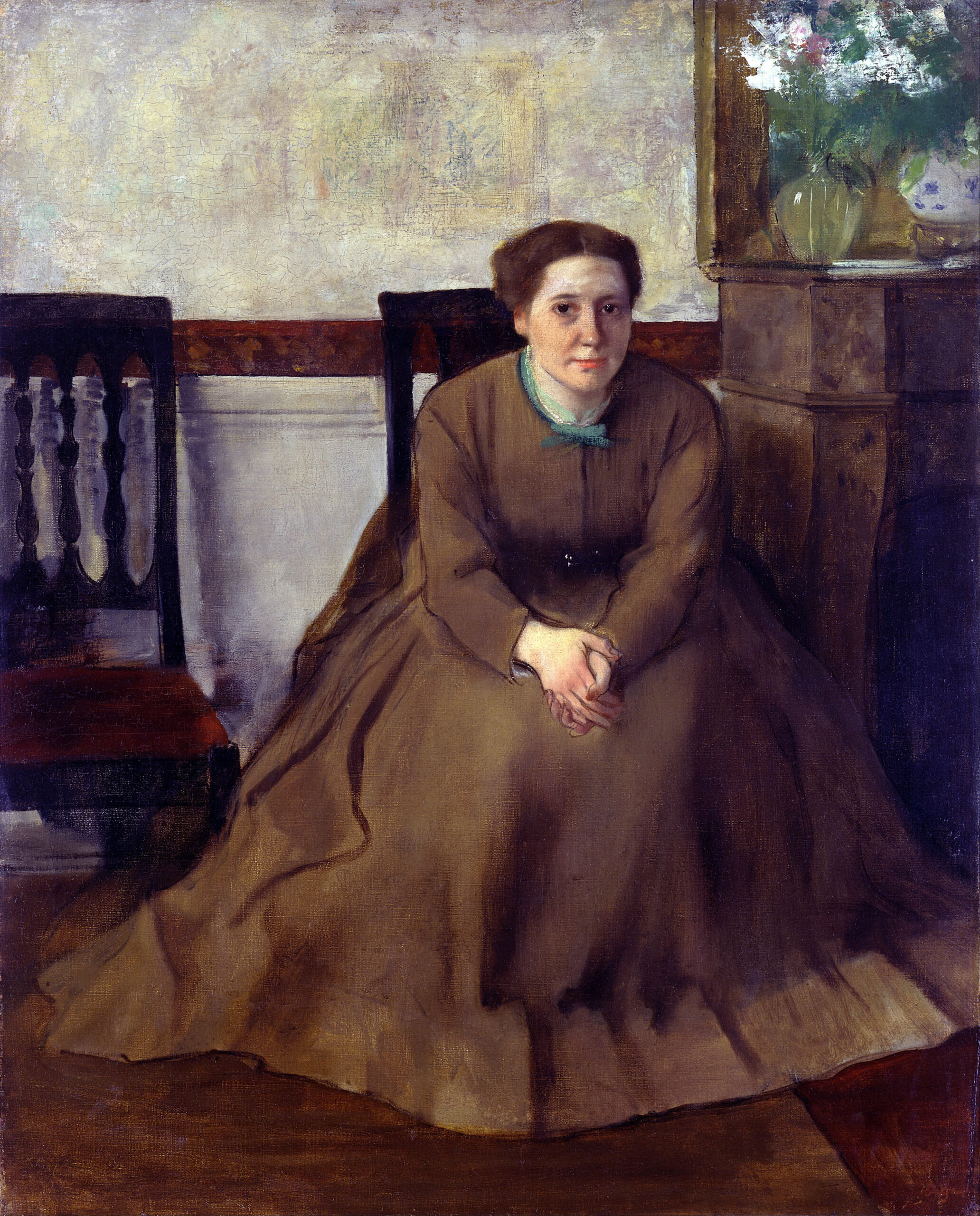
Shortly before Frankenthaler met Clement Greenberg, he had published in 1948 an essay entitled “The Necessity of the Old Masters” and in the year they met, 1950, one called “The Venetian Line.” He argued in the former that since painting has freed itself from representation, it seems at liberty to reject all but the most recent past—but “the advanced painter cannot withdraw his attention from the past with impunity.” In the latter, he argued for the continuity of the long tradition of painterly painting established in sixteenth-century Venice. As I mentioned earlier, he was advocating “post-painterly abstraction” in 1964. However, looking at the names of the artists whose work Frankenthaler paraphrased, it seems clear that she, first, set herself the task of transforming the Venetian line in her soak-stain paintings, then keeping it alive in her painterly paintings beginning in the 1970s.
Much more remains to be said on Frankenthaler’s relationship to the art of the past—and of her contemporaries, for that matter—but let me now return to the changes in the new monograph when compared with the earlier one. I spoke earlier of deleting illustrations to make room for newer one. I also deleted passages of weaker text from the earlier volume. While revised passages of the earlier one do appear here, most have been rethought and rewritten, and mistakes corrected. Doing that, I found myself remembering T.S. Eliot’s words in his 1923 essay, “The Function of Criticism”:
… the larger part of the labour of an author in composing his work is critical labor: the labour of sifting, combining, constructing, expunging, correcting, testing: this frightful toil, employed by a trained and skilled writer on his own work is the most vital, the highest kind of criticism.
I don’t know about the highest, but I am a better writer than I was thirty years ago. And I had, this time around, the great benefit of the careful attention to chapter-by-chapter as it was written: fact-checking at the Helen Frankenthaler Foundation by Maureen St. Onge and Sarah Haug, its archivist; and detailed examination of the text by my always first reader, my wife, Jeanne Collins; then by my long-time friend and frequent editor, David Frankel.
I was also better informed than I was earlier. There were not then the number of archival sources on which I have been able to draw: Helen’s letters to friends, reports of those who knew her, reviews of her exhibitions, and so on.
Of the many changes in what I had written in the earlier book, let me mention only two: an addition and a correction. One trove of material was the journal kept by the writer and close observer of art-world events, B.H. Friedman. From it, I was able to add a curious incident that he recorded as taking place on Valentine’s Day of 1961, when he and his wife Abby accompanied “the Motherwells,” that is to say Helen and Bob, to a fancy restaurant for dinner.
Returning, Helen said she had little presents for them. Abby’s was a small aluminum disk like those on which children stamp their names. It read, “Stop Abstract Expressionism.” His said on one side, “Accepted,” and on the other side, “Rejected.” This strange act on Helen’s part may well have been motivated by how the triumvirate of second-generation Abstract Expressionism had just come to an end. With Grace Hartigan moving to Baltimore and Joan Mitchell to Paris, Helen’s first retrospective at the Jewish Museum in 1960 had been its final public event.
But first-generation Abstract Expressionism was also on the brink of being, if not quite stopped, then pushed into the past. In 1962, Greenberg published an essay titled “After Abstract Expressionism” in support of Color Field Painting. Simultaneously, de Kooning’s gallery, Janis, presented an exhibition called “New Realists” with works on comestible subjects by Claes Oldenburg, Roy Lichtenstein, Andy Warhol, and others. Although pilloried by Time magazine as the “Slice-of-Cake School,” it was widely understood to represent the launching of Pop Art.
One correction that I made in the new monograph was of a mistake I had made twice with respect to Helen’s first paraphrase, Venus with a Mirror. In the 1989 monograph, I wrote that Helen had based it upon Rubens’s portrait of his wife, Hélène Fourment, in his Venus in Front of a Mirror of c. 1615 at Munich. She reviewed my text prior to publication and did not correct this attribution. So, I repeated this statement in the catalogue of the Gagosian 2013 exhibition of Frankenthaler’s works of the 1950s, except I located the Rubens painting in Vienna, where it actually is.
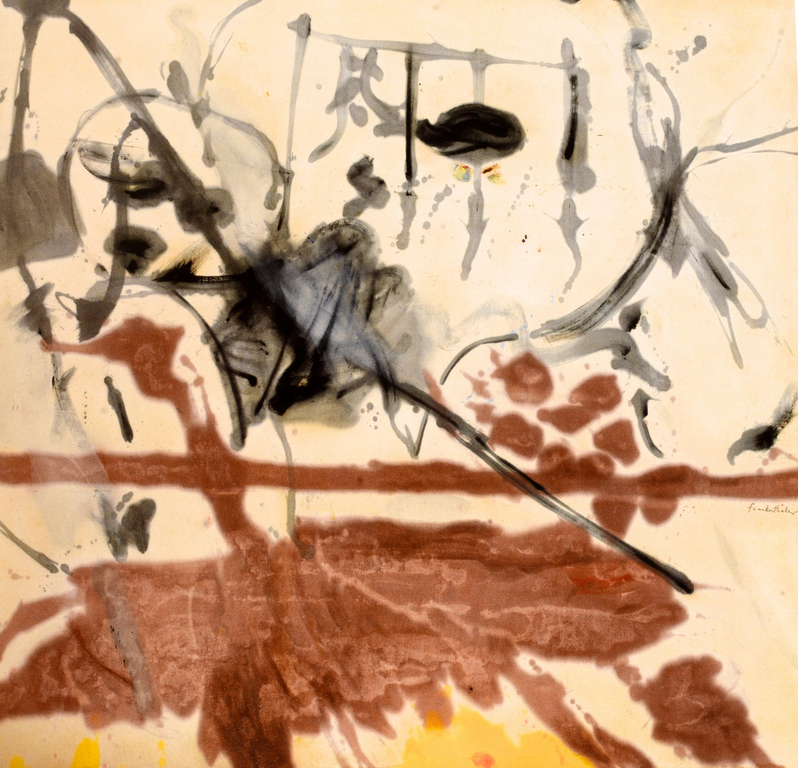
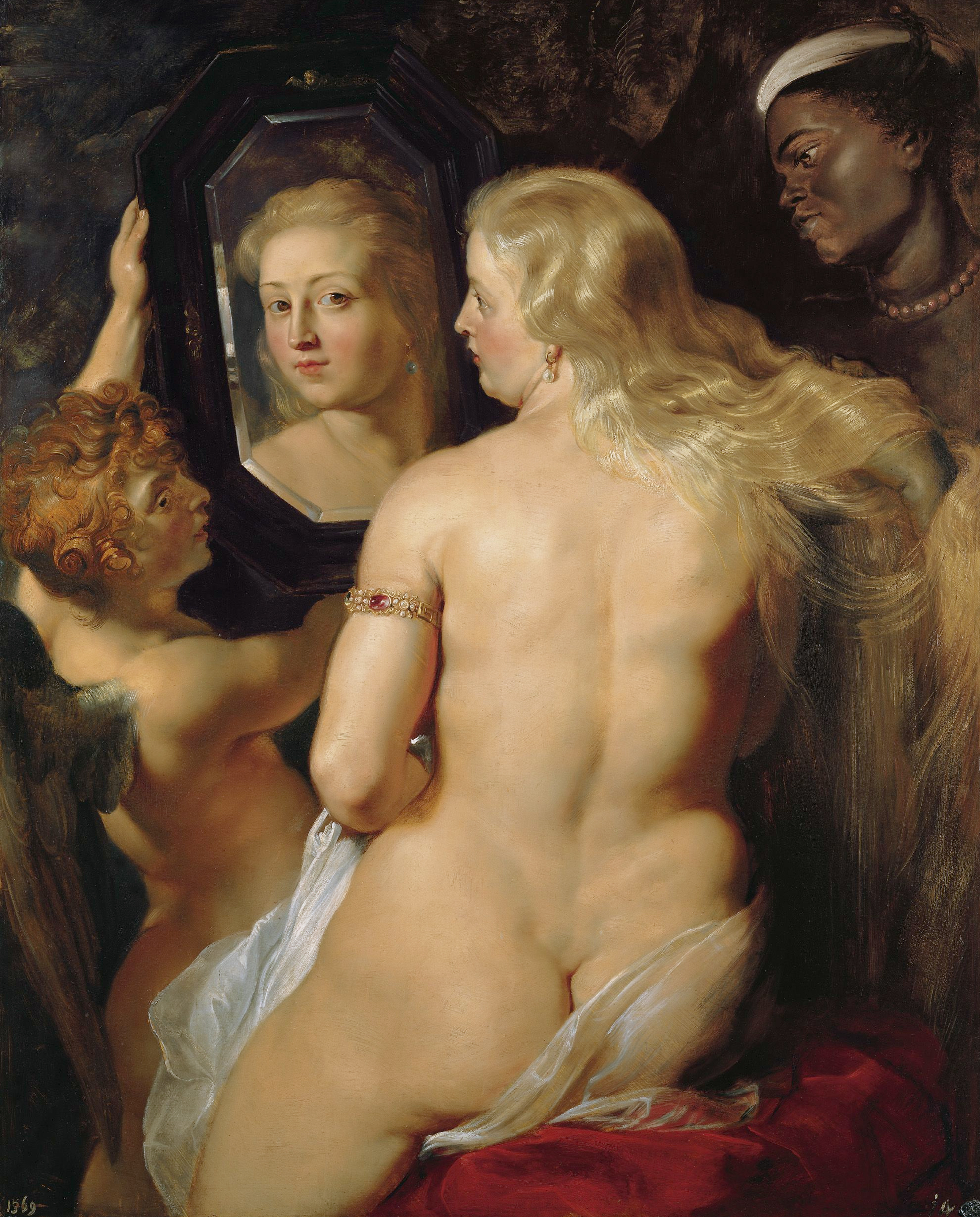
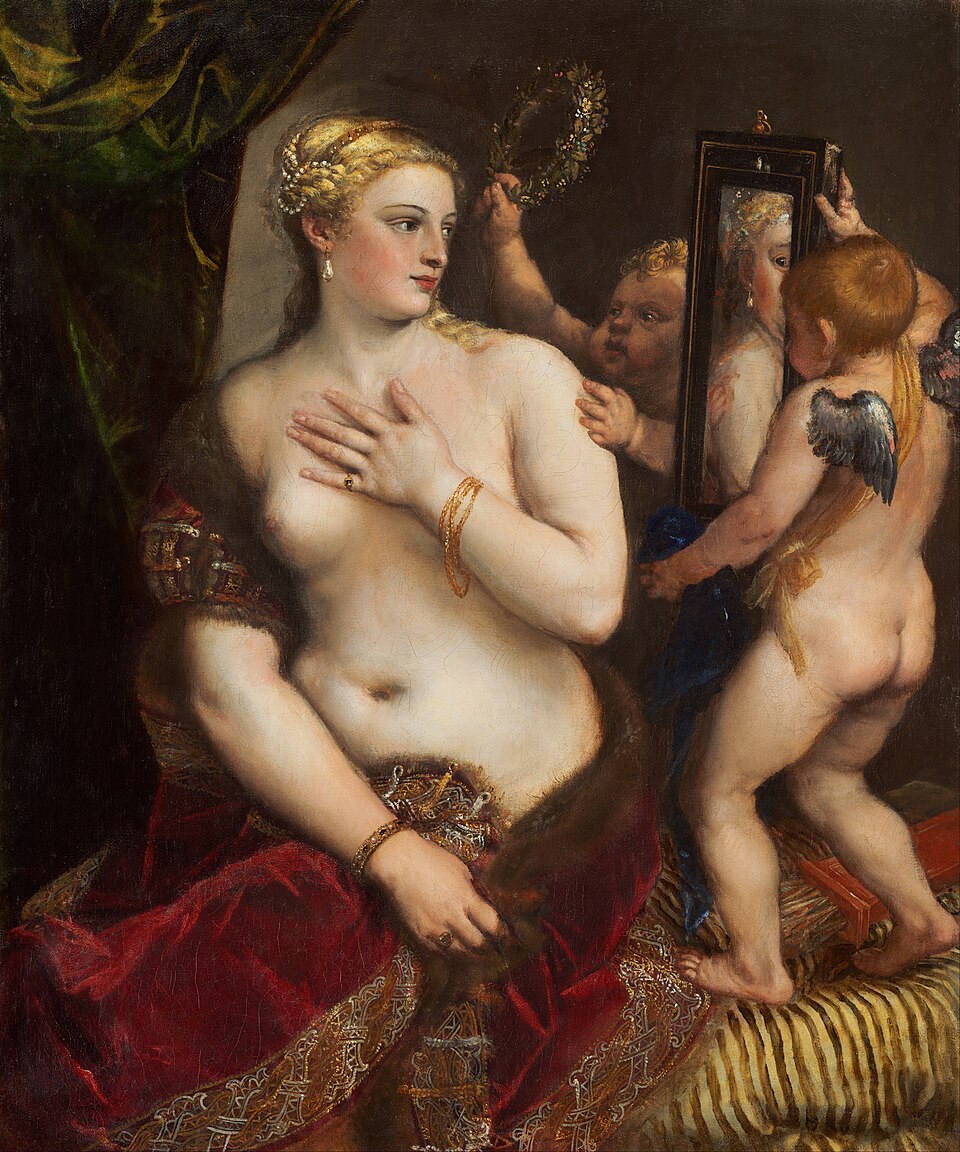
It was only while preparing the new monograph that I learned that Helen had told an interviewer in 1966 that her painting was based upon Titian’s painting of the same subject at the National Gallery of Art in Washington, DC. Still, since she had not changed my reference from Rubens to Titian, I remained unsure on which artist it was based, but as Bob Dylan famously sang, “Take what you have gathered from coincidence.” The association of Hélène Fourment and Helen Frankenthaler seemed just too good to give up. What pushed me to Titian was editor David Frankel saying my statement that Rubens portrayed his wife, Hèlene Fourment, as Venus in a painting of 1615 would have required extraordinary prescience on the artist’s part since Hélène was born only the previous year.
There were many other additions and corrections, which allowed me to say more about the critical climate in which she worked and the artists in which she was interested. I thought at times of Alfred Barr’s unmatched 1951 book, Matisse: His Art and his Public, and realized that I too was writing a history of an artist’s critical appreciation along with that of the art itself.
Doing so, I had to consider the two conditions of the agreement that Helen and I made and that I had kept in writing the earlier volume: first, that it would be about her art not her life. Second, that it would not address her status as a woman artist.
In writing the new volume, I found myself having to break these two conditions since her lifestyle and her gender have been invoked by others in the negative appreciation of her art.
The first was diminution of her work owing to her privileged Park Avenue upbringing. She was not a downtown, left-wing artist but an Upper East Side conservative and looked it: “My life is square and bourgeois,” she told an interviewer. Just like artists from Paul Cézanne to Florine Stettheimer, she enjoyed the detachment provided by wealth to make what she wanted to make; to travel where she wanted to travel; and to do pretty much what she wanted to do—except be too long away from her studio.
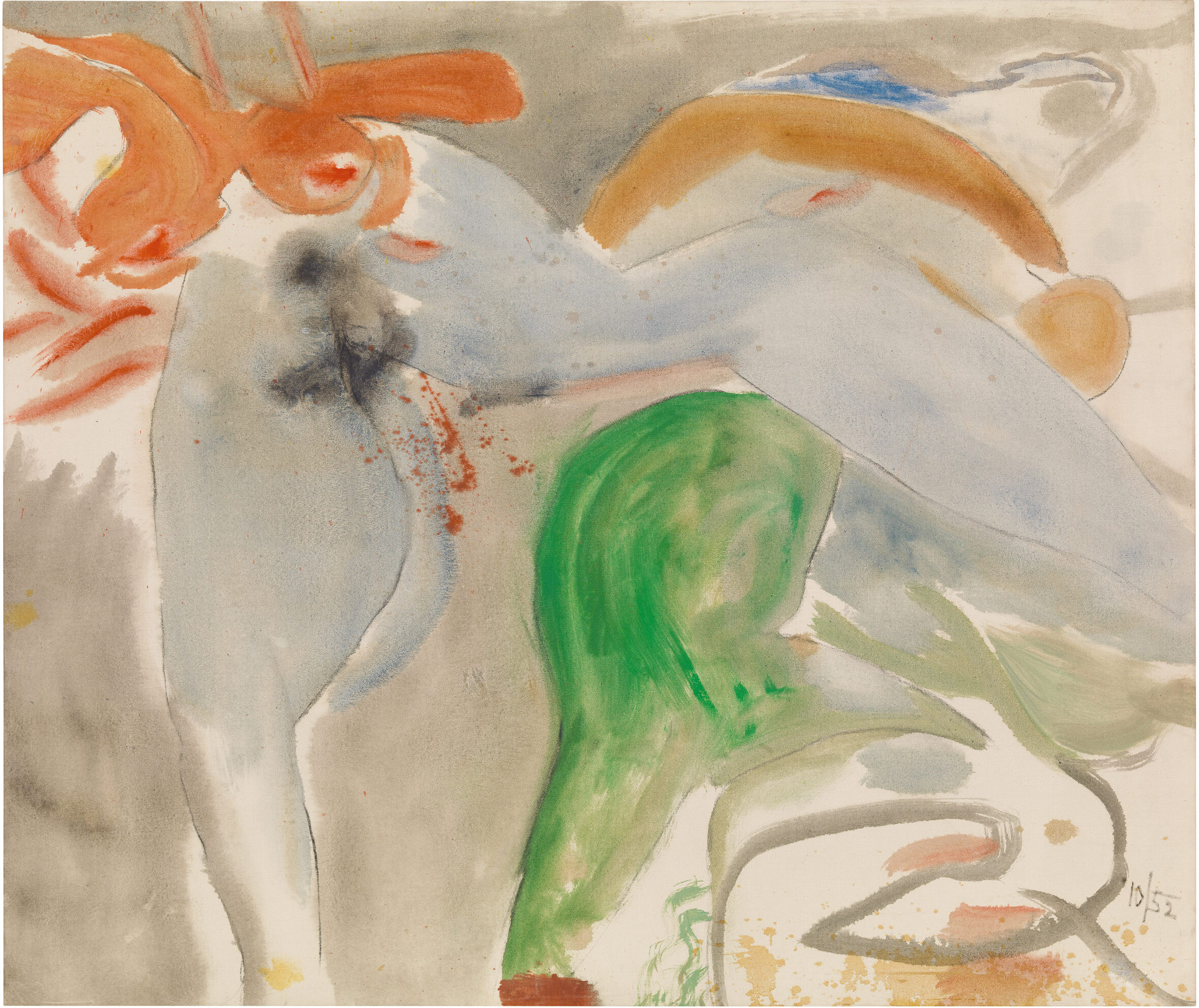
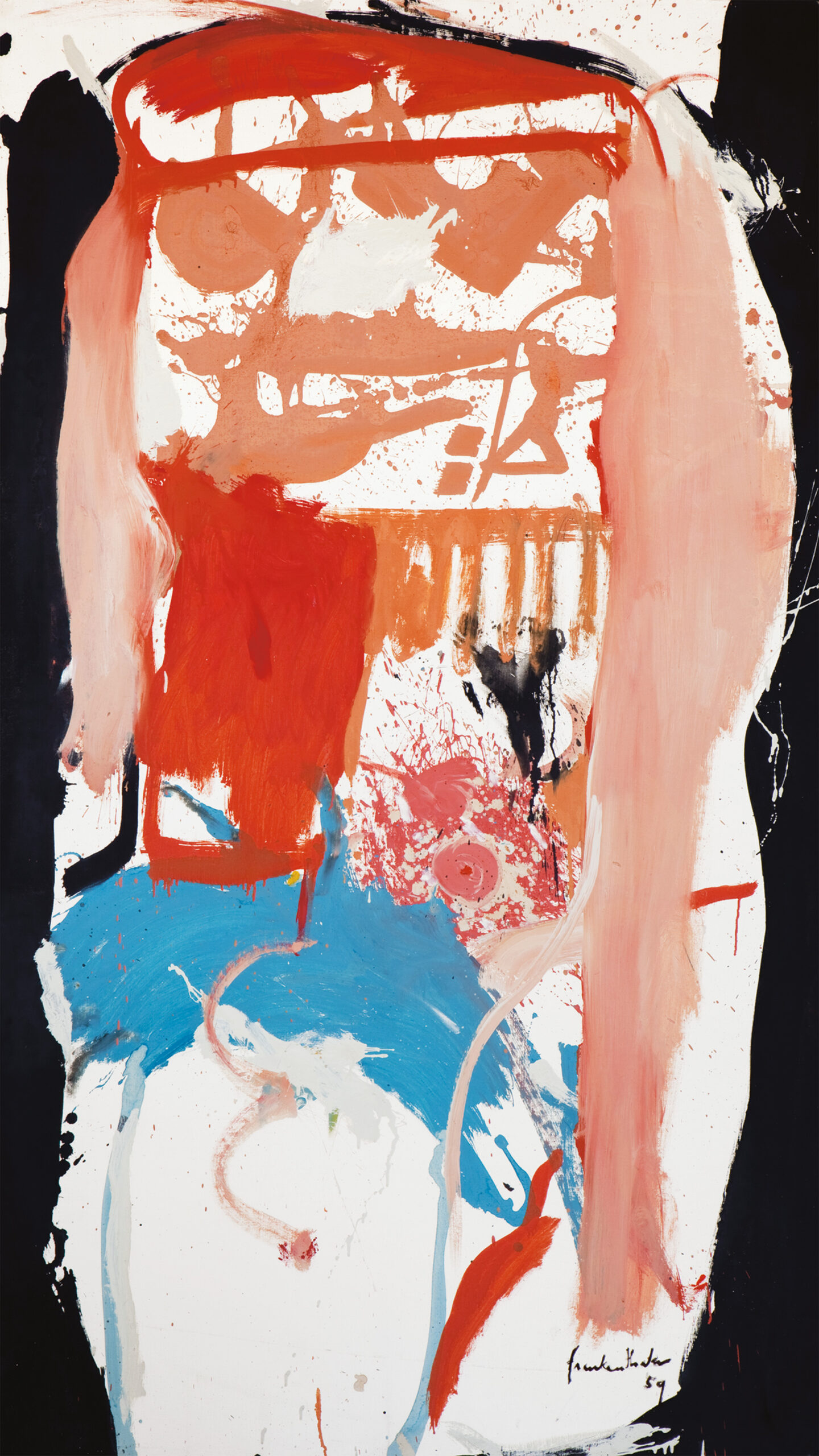
With respect to her gender, neither the provocative 1952 Scene with Nude nor the intriguingly titled 1959 Woman’s Decision appear to have attracted much attention when exhibited shortly after they were made. But after the former had been illustrated in my 1989 monograph, it did. Then, its reception merged two earlier interpretations of Frankenthaler’s as specifically feminine, which had been growing since the late 1950s:
First was the long historical association between color and femininity, which was repeated early on by—inevitably—male critics, who referred to the color of her soak-stain paintings as cosmetic and the works themselves as too delicate, insufficiently tough.
Second, came reference to her work’s porosity, which a woman appears to have been the first specifically to associate with menstruation: Helen’s colleague, but never close friend, Joan Mitchell, shockingly referred to her as “that Kotex painter.” However, by the early 1960s, a male critic was writing that “Frankenthaler’s painting is manifestly that of a woman” and what is “distinctly feminine” are “the broad, bleeding-edged stains on raw linen.”
By the mid-1960s, this was an unsupportable conclusion: she had changed from oil paint to acrylic, which did not bleed at the edges as oil paint did. But canvases by a woman using thinly diluted, loosely applied paint sufficed to keep the idea going.
It is now very much to the point to recall what the poet Ezra Pound had to say on the subject of criticism: “The best criticism of any work, to my mind the only criticism of any work of art that is of any permanent or even moderately durable value, comes from the creative writer who does the next job, and not, not ever from the young gentlemen who make generalities about the creator.” Here, the next job was done by younger women who did not object to being called female artists, including Lynda Benglis, Carrie Moyer, Joan Snyder, and Faith Wilder.
While discussion of these subjects, and others, has made the new monograph much larger than the previous one, I hope that it will enlarge the discussion of Frankenthaler’s work to other topics. And, of course, I hope that we will not have to wait too long for a catalogue raisonné. But what I look forward to most is a new retrospective.
Her last retrospective, not curated by me, was shown at The Museum of Modern Art in 1989, when my long-delayed first monograph was also published. Comprising only forty paintings, it was rightly criticized by Karen Wilkin for having tied Frankenthaler’s development too firmly back through her lightest soak-stained works to the earliest one in the show—Mountains and Sea, of course.
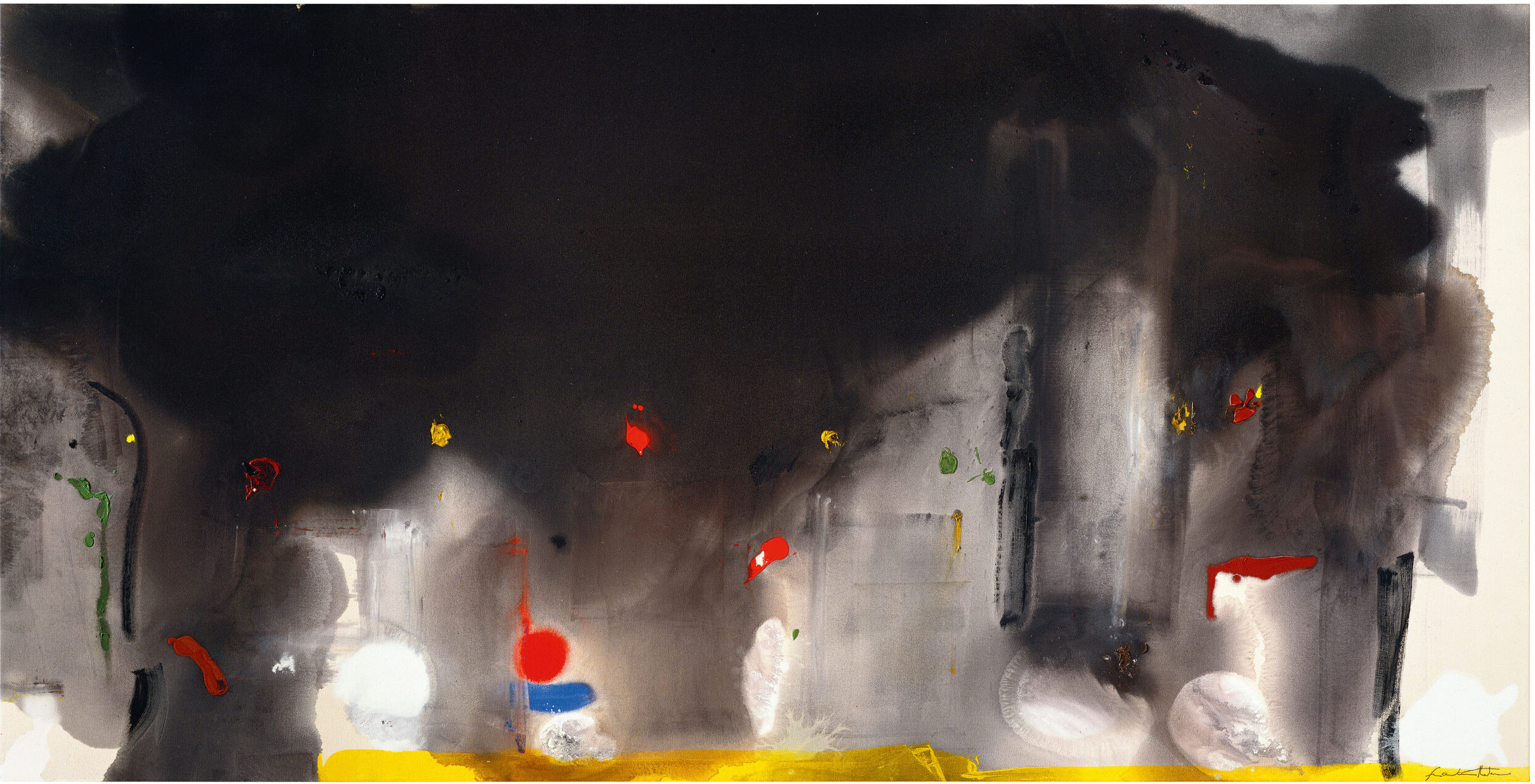
As Wilkin pointed out, with the single exception of the final work, the 1988 Casanova, “none of the ‘rough,’ less-manicured paintings were there, the ones with the large-scale, let-it-all-hang-out drawing and the abrasive color.”
Unsurprisingly, then, a good number of other critics spoke of that retrospective as showing her work to be too “lyrical,” too “beautiful,” owing to her supposed continuing “loyalty” to (Greenbergian) post-painterly, color field painting.
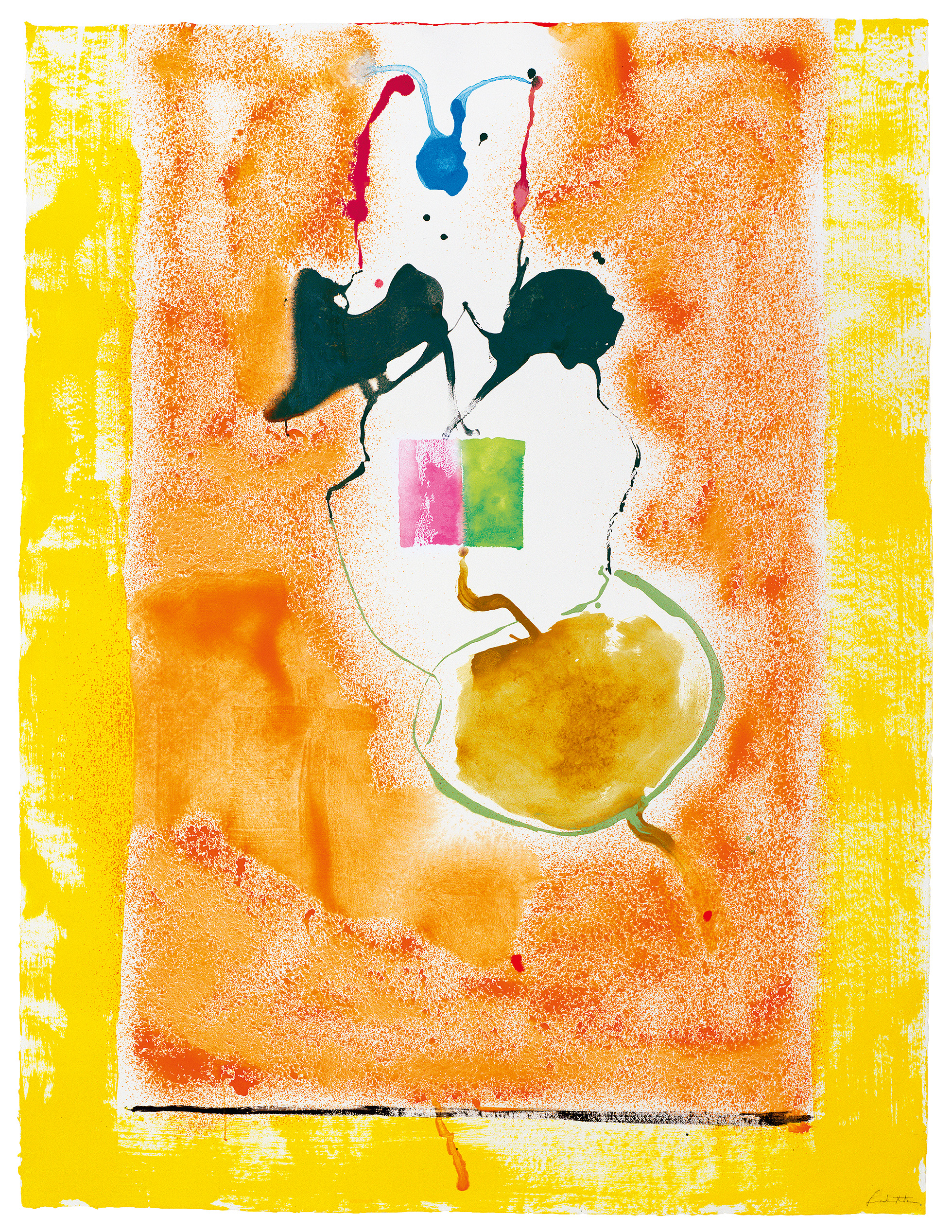
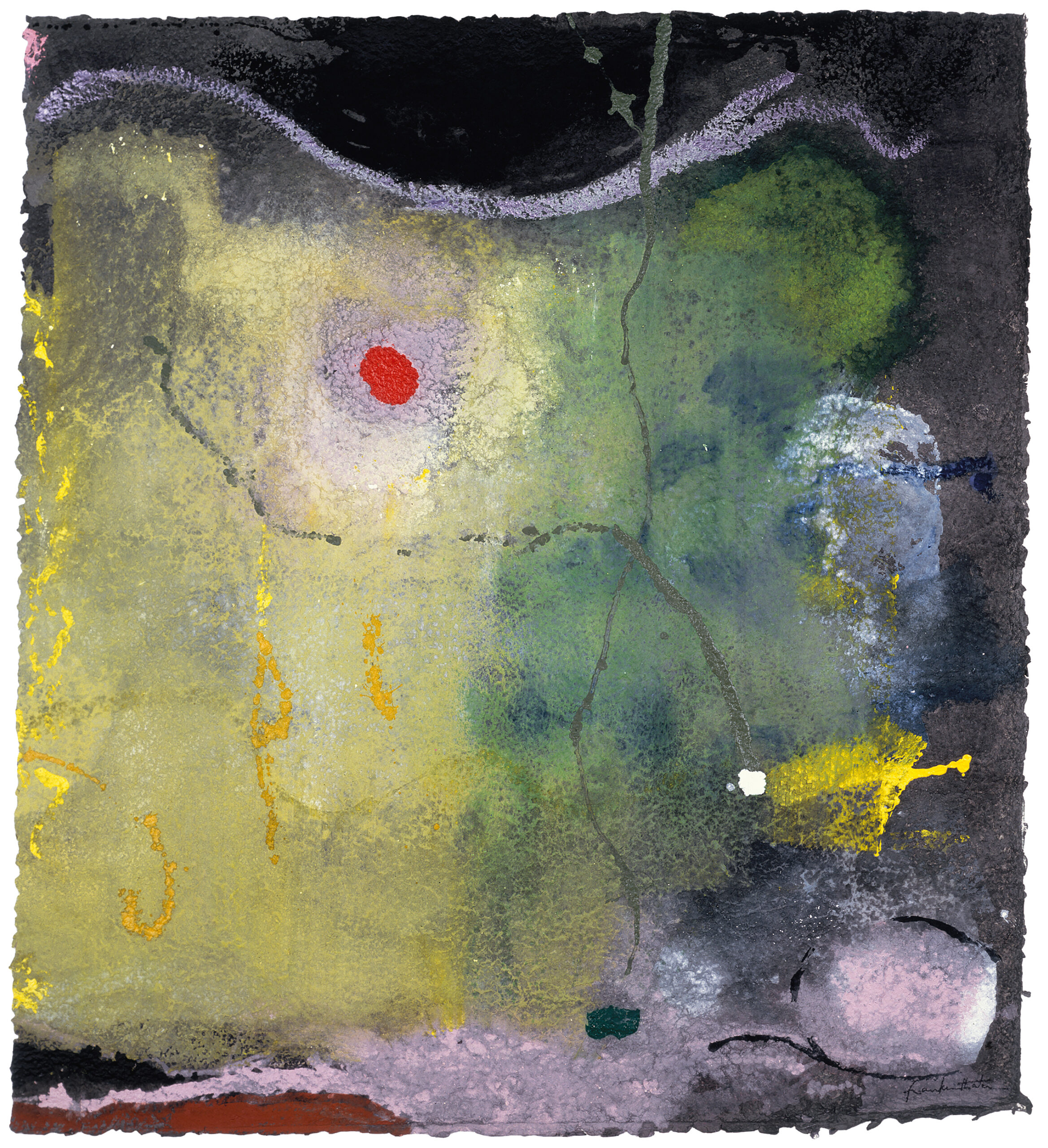
What followed afterwards showed that she was ready to acknowledge her roots but also someone ready to show how far from her beginnings she was willing to grow.
In the 1989 book, I did not make judgments of importance compared to that of other artists, and I do not do so in the new one. But I think we can legitimately ask ourselves how many American artists of the second half of the twentieth century made continually changing, painterly abstract compositions over fifty-year careers.
I can count only two: Willem de Kooning and Helen Frankenthaler. De Kooning’s elevated status has long been recognized. I look forward to the new Frankenthaler retrospective to see the results of a very different, but equally compelling, pictorial imagination laid out on gallery walls, rather than in the illustrations of a book.

This talk was delivered on November 30, 2024 at the Studio School, shortly after the publication of my new monograph on Frankenthaler.
Let me begin by saying I am delighted to be back at the Studio School, for which painting is a priority, to speak about my new monograph on a great painter—and printmaker—Helen Frankenthaler.
I first met Helen, in 1976, shortly after the opening of my inaugural exhibition as a curator at The Museum of Modern Art, devoted to Henri Matisse, André Derain, and their Fauvist colleagues. On April 22, a message from her was delivered to me from the Museum’s Information Desk: “They’re throwing me out …. I can’t stay any longer. 9 pm alas. This is a fan note hastily left at the desk to say, your Fauve show is great, inspiring, necessary.”
The result of her leaving the note was that we met and talked about the exhibition. I was not familiar with her work but soon realized that what she had been doing recently was more akin to the Derains in the Fauve show than the Matisses on view—which she agreed were the greater, but their surfaces more opaque and more fragmented for her to emulate.
Conversely, it was clear to me that hers were tougher than the Derains, without the weakness of their picturesque quality.
Then, having read my catalogue, she asked me—certainly to my surprise—if I would at some point be interested in writing a book about her work. Abrams had published a monograph on Frankenthaler in 1972 with a fine, short critical text by Barbara Rose. So this would be a second book, at a future date, written from the viewpoint of an art historian.
It may, or may not, be relevant that the 1972 book had been designed by Robert Motherwell before he and Helen divorced that same year. I had known Bob quite well before I met Helen, so I told him that she had asked me to do this new book. He drolly replied, “I guess she wants to get me off her coffee table.”
In 1970, Motherwell had persuaded me to edit an English version of the Dadaist Hugo Ball’s great 1927 book, Die Flucht aus der Zeit (The Flight Out of Time), for his “Documents of 20th-Century Art” series.
That became a four-year-long, fascinating but demanding process, requiring a lot of research to fact-check Ball’s numerous German sources. So, when Paul Gottleib, Abrams’s publisher, asked me at the end of 1979 if I could submit a text of 20,000 words on Helen Frankenthaler by the following October, I thought it would be a breeze. In fact, it would be ten years before it was published: not only because I had “a day job” at The Museum of Modern Art but also because it had become larger and far more ambitious in scope. The conception of that 1989 volume remains in the new one.
Essential to the earlier conception was addressing the common belief that Mountains and Sea, the soak-stain canvas Helen painted on October 26, 1952, was her most important, because most influential, picture. A “bridge between Pollock and what was possible” was how Morris Louis famously described it—meaning what most people came to know as Color Field painting but the critic Clement Greenberg called, in 1964, “Post-Painterly Abstraction.”
But as I began to work on the 1989 monograph—with Helen and her studio manager, Maureen St. Onge, unrolling canvases long in storage—it soon became clear that, from start to finish, most of them were not post-painterly, color-field works but painterly abstract compositions: some far more painterly than others, some less fully abstract than others, and some with explicitly representational details.
And the kind of paintings that I saw Helen making in her studio, as I was writing that first monograph, ranged from those as different as the 1979 Feather, which seemed continuous with her early soak-stain canvases, and the 1980 White Cap, which did not. Frankenthaler obviously followed Willem de Kooning’s celebrated dictum, “I have to change to stay the same.”
That 1989 book was originally conceived to be akin to the Rose book, with a concise critical introduction and an album of color plates. But, looking at both her earlier and most recent works, it became clear that what would be far more useful would be a full-length, evenly weighted, historical as well as critical study.
Therefore, my aim changed to a book providing a chronology of her entire painting career: after a chapter on her work and its influences before Mountains and Sea, it addressed her career in two parts, and the same is true of the new volume:
The first part follows her development in the 1950s, almost from painting to painting, which was how it advanced—roughly speaking, from her first-exhibited work, Beach, in 1950 to Italian Beach in 1960.
The second part more often moves from one group of paintings to another, reflecting her changed practice in later decades: from her 1961 compositions with animal images to works of a similar subject forty years later.
In 1960, Frank O’Hara wrote in the catalogue of Frankenthaler’s first retrospective exhibition, “One of her strengths is this very ability to risk everything on inspiration.” She herself said in 1984, “Anything is possible …. It’s all about risks, deliberate risks.” The first part of the 1989 book, and of the new one, charts the continuing inspiration that propelled her art in the 1950s; the second, the continuing risk-taking that characterized all that followed in an extraordinary development over more than half a century.
A critical component of the earlier volume, carried over into this one, was that I had the benefit of many long discussions with Helen, often in front of her work—we looked at all the works then still in her possession—and I had free access to her archives. Moreover, she read different versions of the earlier text, from draft to galley form, before its publication in 1989 and contributed to it a very great deal in the way of information, suggestions, and general advice. But then as now, my aim was to offer not only a history of Frankenthaler’s art but a particular view of it, and Helen was explicit from the start in acknowledging that the view of her art in the published text would be the responsibility of its author alone.
And she understood, of course, that any art-historical text that directly addresses works of art has to set them in an order, which may at times be for the convenience of the narration rather than the sequence in which they were made. Also that, while at times, especially in the 1960s, she made runs of similar works, what I was writing did not imply conscious, deliberate planning on her part. In fact, she wrote on a draft chapter of the 1989 volume that I had shown her, “Is it too much like a novel?” Meaning, she explained, not that it read like fiction but that it described a long and complex sequence of events that are connected in ways she was not necessarily aware of as she was working.
But I shall not attempt to summarize here the changes the new book describes in her fifty-year career. Rather, I want to say something about its difference in content from the earlier book and about some important issues in her work more fully or not considered before.
With respect to this current book’s content, I have learned and seen more than I did thirty years ago and especially so over the past decade. This came largely from curating—mainly with Lauren Mahony—five small exhibitions of Helen’s paintings with Gagosian and the Helen Frankenthaler Foundation.
The result included adding examples of works previously unknown to me, including some painted before Mountains and Sea and others that showed Frankenthaler’s turn away from soak-stain painting at the end of the 1950s. And, of course, the new book needed a large, final chapter that addressed her art between 1989 and 2004, when she made her final works. That justified deleting the illustration of weaker and less important works in the earlier volume to make space for adequate representation of her unexpected, extraordinarily ambitious late paintings and groundbreaking prints.
The view of Frankenthaler’s art reflected in the choice of illustrations for the original volume was the joint view of the three of us responsible for choosing them. We gave somewhat stronger emphasis to newer over older work because it was not otherwise available in book form. That imbalance has been corrected in this edition, in part to find space for post-1988 works in the new final chapter without unduly increasing the total number.
Again, I concentrate on Frankenthaler’s paintings, which constitute the core of her art. But I have maintained brief discussion of Helen’s sculpture in clay and in metal, while excluding some other ancillary activities that she had wanted in the earlier volume, from large commissioned works to ceramic plates.
Although many separate publications do now exist on her paintings on paper, I make more mention of them than before. This was especially necessary in the final chapter, which covers the years when working on paper rather than on canvas became central to her practice. More could be said about the difference between what it was like making sometimes very large works on large tables and no longer on the floor, owing to her difficulty in bending. She joked about this, saying, “I no longer stoop to conquer.” But the means of her marking had to be different: reaching across and around the painting surface, never able to kneel—or step or lean—onto it, may account from the tighter compositions with few very long drawn lines than in earlier paintings. We shall look at some later.
Not despite but because there are now even more publications on her prints, I found myself impelled to say more about them in the new book: it is clear that she was a pioneer in especially making woodcuts and that print-making was central to her identity as an artist. There is more to be said on the reciprocal relationship of her prints and paintings.
I find it worthy of notice that, in 1963, Frankenthaler rescued some overworked paintings by turning them over and seeing what she called “a stained memory on the other side,” including parallel lines recording the floorboards on which they had laid: these paintings were effectively monoprints on a wooden matrix. It would be exactly a decade before she made her first woodcut, East and Beyond, for which she had to learn how to use a jigsaw to cut out the eight mahogany blocks from which it was printed. An accidental discovery in her studio on the one hand, a long artisanal process on the other. Thereafter, the advancement of her practice appears to have been aided by her periodically interrupting making paintings, which took only hours or days to complete, by making prints, some of which occupied her for months.
There are other topics in addition to these, which I raise in the book, that I hope someone else will be interested enough to pursue further. I said earlier that Frankenthaler made painterly abstract compositions: some far more painterly than others, some less fully abstract than others, and yet others with explicitly representational details. A case could be made that she was not, in fact, mainly an abstract painter, in the sense of making non-objective compositions, but one who made pictures with represented subjects—subjects that are represented with varying degrees of specificity at different points in her career.
She recalled a puzzle, like this one, in a children’s magazine, that involved looking for hidden images in a picture of “what seemed to be a perfectly plain garden with a tree and a lake.” And at Bennington, she read William Empson’s celebrated book, Seven Types of Ambiguity, which speaks of ambiguity not as vagueness but as a vehicle of different types of allusion. This is what she sought for her art from an early moment; in 1957, naming a painting with the title of Empson’s book. The less-easily-found bird in the right margin is a reprise of Picasso’s famous dove of peace of 1949, around the time that Frankenthaler read Empson’s book.
The fox in the following year’s Winter Hunt is more easily found, much more easily in fact, than in Pollock’s 1951 painting of which she said, “I saw a drawing of something like an animal or a fox, in a wood in the center of it.”
However, another 1958 painting, Hotel Cro-Magnon, differs in that the drawing simultaneously describes the famous bull at Lascaux and lays out the pictorial composition. With few later exceptions, the drawing of a source, actual or imagined, and the drawing that composes the painting are as one.
These borrowings raise the issue, which does deserve further attention, about what she marks as her own and what she tells us comes from others. Beginning in a work like the 1951 Sightseers, in which she wrote her name—and continuing in abstract paintings with the self-inscription of the artist’s moving hand—the sense of her-painting-herself is echoed in some paraphrases of Old Master paintings, including her first, the 1956 Venus and the Mirror, of which more later.
Since copying remains part of the Studio School curriculum, I want to devote some time to Frankenthaler’s references to works by other artists. Prior to painting Mountains and Sea, she had followed T.S. Eliot’s famous admonition that since “maturing consists largely of taking in and digesting various influence … a poet should subject himself to as many influences as possible.” I don’t know if this is a record, but within the space of about two years, she voraciously subjected herself to the stylistic influences of nine artists: Matisse, Picasso, Braque, Kandinsky, Miró, Gorky, Gottleib, de Kooning, and Pollock. I won’t stop to look at them here. They are discussed in the monograph but are of less interest than second group of borrowings.
As Eliot pointed out, there is an essential difference between how a poet’s ancestors assert their immortality in his work in the impressionable period when he is maturing and in his period of full maturity. In Frankenthaler’s case, some six years after painting Mountains and Sea, she began to look for ancestors not any longer among modern and contemporary painters but in work of the artists to be found in museums. And it may not be accidental that this coincided with the beginning of her full maturity as a painter.
She regularly visited museums in Europe as well as in the United States and from the date of her first European trip after painting Mountains and Sea was wondering what the past could teach her even if, as she put it, the real stuff is going on in New York.
I write in the new book how, in the years 1954–56, she turned her back on soak-stain painting to make more conventionally Abstract Expressionist heavily-impastoed works. Is it a coincidence, then, that she made three other paraphrases of great early European paintings after Venus with a Mirror in the latter part of that decade, even as she returned to soak-stain painting to make great run of them through the rest of the decade? For any painting with a recognizable external subject, we reasonably ask ourselves where the artist stands in relationship to her material. However, with works of paraphrase, we cannot but ask ourselves where the artist stands in relationship to the culture of representation to which they belong. And why and when an artist may want to affirm that relationship.
In any event, after the 1950s her paraphrases of early paintings stop, not to begin again until the mid-1970s. In this case, we may surmise that her having pushed abstraction to great, non-referential simplification by the end of the 1960s led her to want to re-engage with her roots. She began this in 1971 by alluding to an earlier artist, Matisse, without referring to a particular Matisse painting.
But two years later, she returned to paraphrase in the context of landscape abstraction when she based a fragment of the sky over distant mountains in Bassano’s Flight into Egypt of c. 1544–45 to paint her 1973 Hint from Bassano.
Then, in the decade from 1979 to 1988, excluding a print based on a Degas and a sculpture based on a Matisse, Frankenthaler produced ten paraphrases of historical compositions: in sequence, by Titian (again) and Manet, Rembrandt, Manet (again), Hiroshige, Zurburan, Matisse, Piero della Francesca, Zurburan (again), and Degas. I find it interesting that the first and last were based on paintings of women. But the sequence as a whole is heavily loaded towards a newly personal form of the painterly painting that she had briefly engaged in the mid-1950s.
Shortly before Frankenthaler met Clement Greenberg, he had published in 1948 an essay entitled “The Necessity of the Old Masters” and in the year they met, 1950, one called “The Venetian Line.” He argued in the former that since painting has freed itself from representation, it seems at liberty to reject all but the most recent past—but “the advanced painter cannot withdraw his attention from the past with impunity.” In the latter, he argued for the continuity of the long tradition of painterly painting established in sixteenth-century Venice. As I mentioned earlier, he was advocating “post-painterly abstraction” in 1964. However, looking at the names of the artists whose work Frankenthaler paraphrased, it seems clear that she, first, set herself the task of transforming the Venetian line in her soak-stain paintings, then keeping it alive in her painterly paintings beginning in the 1970s.
Much more remains to be said on Frankenthaler’s relationship to the art of the past—and of her contemporaries, for that matter—but let me now return to the changes in the new monograph when compared with the earlier one. I spoke earlier of deleting illustrations to make room for newer one. I also deleted passages of weaker text from the earlier volume. While revised passages of the earlier one do appear here, most have been rethought and rewritten, and mistakes corrected. Doing that, I found myself remembering T.S. Eliot’s words in his 1923 essay, “The Function of Criticism”:
… the larger part of the labour of an author in composing his work is critical labor: the labour of sifting, combining, constructing, expunging, correcting, testing: this frightful toil, employed by a trained and skilled writer on his own work is the most vital, the highest kind of criticism.
I don’t know about the highest, but I am a better writer than I was thirty years ago. And I had, this time around, the great benefit of the careful attention to chapter-by-chapter as it was written: fact-checking at the Helen Frankenthaler Foundation by Maureen St. Onge and Sarah Haug, its archivist; and detailed examination of the text by my always first reader, my wife, Jeanne Collins; then by my long-time friend and frequent editor, David Frankel.
I was also better informed than I was earlier. There were not then the number of archival sources on which I have been able to draw: Helen’s letters to friends, reports of those who knew her, reviews of her exhibitions, and so on.
Of the many changes in what I had written in the earlier book, let me mention only two: an addition and a correction. One trove of material was the journal kept by the writer and close observer of art-world events, B.H. Friedman. From it, I was able to add a curious incident that he recorded as taking place on Valentine’s Day of 1961, when he and his wife Abby accompanied “the Motherwells,” that is to say Helen and Bob, to a fancy restaurant for dinner.
Returning, Helen said she had little presents for them. Abby’s was a small aluminum disk like those on which children stamp their names. It read, “Stop Abstract Expressionism.” His said on one side, “Accepted,” and on the other side, “Rejected.” This strange act on Helen’s part may well have been motivated by how the triumvirate of second-generation Abstract Expressionism had just come to an end. With Grace Hartigan moving to Baltimore and Joan Mitchell to Paris, Helen’s first retrospective at the Jewish Museum in 1960 had been its final public event.
But first-generation Abstract Expressionism was also on the brink of being, if not quite stopped, then pushed into the past. In 1962, Greenberg published an essay titled “After Abstract Expressionism” in support of Color Field Painting. Simultaneously, de Kooning’s gallery, Janis, presented an exhibition called “New Realists” with works on comestible subjects by Claes Oldenburg, Roy Lichtenstein, Andy Warhol, and others. Although pilloried by Time magazine as the “Slice-of-Cake School,” it was widely understood to represent the launching of Pop Art.
One correction that I made in the new monograph was of a mistake I had made twice with respect to Helen’s first paraphrase, Venus with a Mirror. In the 1989 monograph, I wrote that Helen had based it upon Rubens’s portrait of his wife, Hélène Fourment, in his Venus in Front of a Mirror of c. 1615 at Munich. She reviewed my text prior to publication and did not correct this attribution. So, I repeated this statement in the catalogue of the Gagosian 2013 exhibition of Frankenthaler’s works of the 1950s, except I located the Rubens painting in Vienna, where it actually is.
It was only while preparing the new monograph that I learned that Helen had told an interviewer in 1966 that her painting was based upon Titian’s painting of the same subject at the National Gallery of Art in Washington, DC. Still, since she had not changed my reference from Rubens to Titian, I remained unsure on which artist it was based, but as Bob Dylan famously sang, “Take what you have gathered from coincidence.” The association of Hélène Fourment and Helen Frankenthaler seemed just too good to give up. What pushed me to Titian was editor David Frankel saying my statement that Rubens portrayed his wife, Hèlene Fourment, as Venus in a painting of 1615 would have required extraordinary prescience on the artist’s part since Hélène was born only the previous year.
There were many other additions and corrections, which allowed me to say more about the critical climate in which she worked and the artists in which she was interested. I thought at times of Alfred Barr’s unmatched 1951 book, Matisse: His Art and his Public, and realized that I too was writing a history of an artist’s critical appreciation along with that of the art itself.
Doing so, I had to consider the two conditions of the agreement that Helen and I made and that I had kept in writing the earlier volume: first, that it would be about her art not her life. Second, that it would not address her status as a woman artist.
In writing the new volume, I found myself having to break these two conditions since her lifestyle and her gender have been invoked by others in the negative appreciation of her art.
The first was diminution of her work owing to her privileged Park Avenue upbringing. She was not a downtown, left-wing artist but an Upper East Side conservative and looked it: “My life is square and bourgeois,” she told an interviewer. Just like artists from Paul Cézanne to Florine Stettheimer, she enjoyed the detachment provided by wealth to make what she wanted to make; to travel where she wanted to travel; and to do pretty much what she wanted to do—except be too long away from her studio.
With respect to her gender, neither the provocative 1952 Scene with Nude nor the intriguingly titled 1959 Woman’s Decision appear to have attracted much attention when exhibited shortly after they were made. But after the former had been illustrated in my 1989 monograph, it did. Then, its reception merged two earlier interpretations of Frankenthaler’s as specifically feminine, which had been growing since the late 1950s:
First was the long historical association between color and femininity, which was repeated early on by—inevitably—male critics, who referred to the color of her soak-stain paintings as cosmetic and the works themselves as too delicate, insufficiently tough.
Second, came reference to her work’s porosity, which a woman appears to have been the first specifically to associate with menstruation: Helen’s colleague, but never close friend, Joan Mitchell, shockingly referred to her as “that Kotex painter.” However, by the early 1960s, a male critic was writing that “Frankenthaler’s painting is manifestly that of a woman” and what is “distinctly feminine” are “the broad, bleeding-edged stains on raw linen.”
By the mid-1960s, this was an unsupportable conclusion: she had changed from oil paint to acrylic, which did not bleed at the edges as oil paint did. But canvases by a woman using thinly diluted, loosely applied paint sufficed to keep the idea going.
It is now very much to the point to recall what the poet Ezra Pound had to say on the subject of criticism: “The best criticism of any work, to my mind the only criticism of any work of art that is of any permanent or even moderately durable value, comes from the creative writer who does the next job, and not, not ever from the young gentlemen who make generalities about the creator.” Here, the next job was done by younger women who did not object to being called female artists, including Lynda Benglis, Carrie Moyer, Joan Snyder, and Faith Wilder.
While discussion of these subjects, and others, has made the new monograph much larger than the previous one, I hope that it will enlarge the discussion of Frankenthaler’s work to other topics. And, of course, I hope that we will not have to wait too long for a catalogue raisonné. But what I look forward to most is a new retrospective.
Her last retrospective, not curated by me, was shown at The Museum of Modern Art in 1989, when my long-delayed first monograph was also published. Comprising only forty paintings, it was rightly criticized by Karen Wilkin for having tied Frankenthaler’s development too firmly back through her lightest soak-stained works to the earliest one in the show—Mountains and Sea, of course.
As Wilkin pointed out, with the single exception of the final work, the 1988 Casanova, “none of the ‘rough,’ less-manicured paintings were there, the ones with the large-scale, let-it-all-hang-out drawing and the abrasive color.”
Unsurprisingly, then, a good number of other critics spoke of that retrospective as showing her work to be too “lyrical,” too “beautiful,” owing to her supposed continuing “loyalty” to (Greenbergian) post-painterly, color field painting.
What followed afterwards showed that she was ready to acknowledge her roots but also someone ready to show how far from her beginnings she was willing to grow.
In the 1989 book, I did not make judgments of importance compared to that of other artists, and I do not do so in the new one. But I think we can legitimately ask ourselves how many American artists of the second half of the twentieth century made continually changing, painterly abstract compositions over fifty-year careers.
I can count only two: Willem de Kooning and Helen Frankenthaler. De Kooning’s elevated status has long been recognized. I look forward to the new Frankenthaler retrospective to see the results of a very different, but equally compelling, pictorial imagination laid out on gallery walls, rather than in the illustrations of a book.