

Issue #53: Normativity, AI, and Photographic Realism

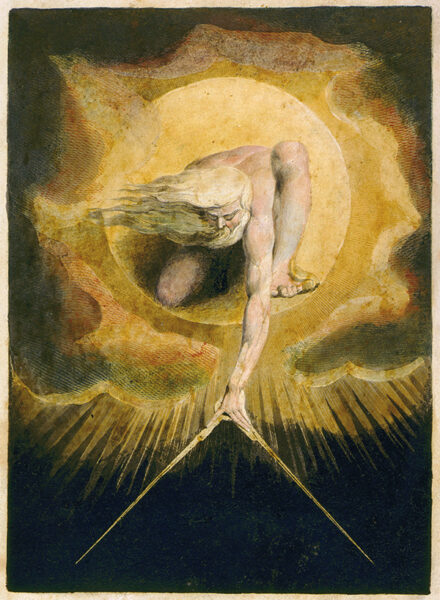
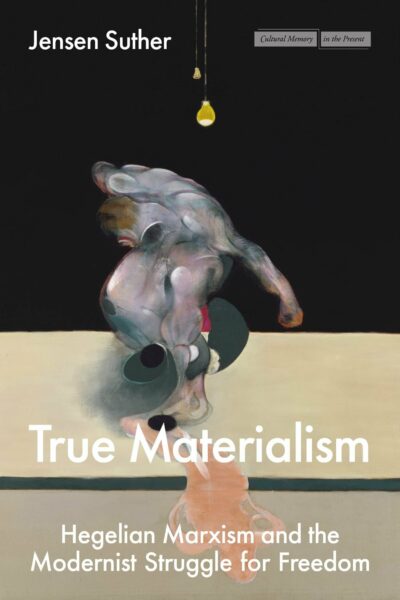
In this issue, Samuel C. Wheeler considers the status of design intention in LLMs, Walter Michaels and Pawel Kaczmarski discuss books by Jensen Suther and Timothy Bewes, Touré Reed is interviewed on “Black History from the Civil Rights Movement to BLM,” Vincent Hiscock discusses the function of idealization in socialist realist photography, and Michael Fried interviews Luc Delahaye.

Inside the issue

What the photographer does: A conversation with Michael Fried

Photographing ordinary subjects with no particular drama was a response to what sometimes appeared to me as a limit: the fact that the photographs I made in the context of news events drew their strength from that of the situations themselves. I thought this was too simple, that ultimately a powerful subject weakens the image. What creates the irreducibility of the photograph is the mechanical trace of the experience, which gives it a value of enunciation. A photograph is the product of a gaze, a moment, and things; it’s the actualisation of presence. But the technical determination of the photographic tool on the one hand and the subordination to the contingencies of the real on the other reduce the perimeter of “making” and give the unconscious a major role. In a way, all that remains for the photographer is the unconscious.

Black History from the Civil Rights Movement to BLM

Constructs like “black-led movements,” the “black freedom movement,” or the “black radical tradition” often strip black life and politics of complexity and, of course, contingency by imagining that our positionality as oppressed people insulates black Americans—like no other human beings, ever—from all proximate cultural, economic, and political influences except for racism and sexism.

The bottom line, though, is that the political gains black Americans have made have always been the product of contingent, utilitarian, cross-racial political coalitions or agreements. This is among the reasons the scope of blacks’ conceptions of both inequality and equality, how blacks conceive the obstacles confronting them, what black Americans perceive to be social justice, along with the terrain on which the fight for a just society can and will be fought, are different depending on when and where you are talking about.

Not What a Lion Ought to Be

Even if we accept that all life “requires” survival and self-maintenance, it is still not clear why we should think about it in terms of purposes and forms. It is perfectly possible to say that living beings simply sustain themselves and reproduce, and once they no longer do, they cease to be alive. Conversely, something that does not do these things is simply not alive. A dead horse is not a failed live one. Unless, of course, we assume that it was trying to stay alive and failed. But in that case, we have already committed to intention as the source of normativity—that is what “trying and failing” means. Similarly, glaucoma may cause an eye to be unable to satisfy its function, but it is the function desired and imposed by its owner (who presumably intends to use their eye to see things). No notion of natural, biological form is necessary; either intention is present (and calls for interpretation), or it is not (and a causal account is all that is needed). The question of whether horses (or bacteria or trees) are capable of intentions is beside the point at the level of theory.

Does ChatGPT refer with Names? Design Intention and Derivative Reference in Large Language Models

Many writers discussing Artificial Intelligence argue that what a Large Language Model produces are not sentences with truth-values but rather “stochastic parrotings” that can be interpreted as true or false, but in the way that Daniel Webster interpreted the Old Man in the Mountain as a sculpture by God with a message for humanity. Steffen Koch has argued that names used by LLMs refer in virtue of Kripkean communication-chains, connecting their answers to the intended referents of names by people who made the posts in the training data. I argue that although an LLM’s uses of names are not connected to human communication chains, its outputs can nonetheless have meaning and truth-value by virtue of design-intentions of the programmers. In Millikan’s terms, an LLM has a proper function intended by its designers. It is designed to yield true sentences relevant to particular queries.

Action/intention/interpretation/ambition—Timothy Bewes and Jensen Suthers

The worry that underlies the sense that both writers and readers can be irresponsible—the writer by failing to have the right relation to her intention, the reader by failing to attend to the writer’s attention—is incoherent. Everyone who produces a speech act produces a text that means what she means by it; everyone who reads one is understanding (or misunderstanding) what she meant by it. This is the force of the non-optional—the reason why intentionalism cannot be a choice—the reason, really, why there is no such thing as intentionalism.

Mystic Realism

During the Vietnam War, Allan Sekula sought to renovate social realism, a practice he associated with Lewis Hine, whom he called a “realist mystic.” Sekula objected to representations of social misery that make reference to religious iconography. Against Sekula, I argue that Hine’s practice illuminates the indispensability of idealizing means to political identification with or confrontation by a solidaristic “we.” The question remains: How to secure the benefit of a beatifying tradition of religious representation without world-transcending implications? How to produce an adequate social analysis without the dispassion of objectivity?

You May Also Like

Issue #53: Normativity, AI, and Photographic Realism

In this issue, Samuel C. Wheeler considers the status of design intention in LLMs, Walter Michaels and Pawel Kaczmarski discuss books by Jensen Suther and Timothy Bewes, Touré Reed is interviewed on “Black History from the Civil Rights Movement to BLM,” Vincent Hiscock discusses the function of idealization in socialist realist photography, and Michael Fried interviews Luc Delahaye.

Inside the issue

What the photographer does: A conversation with Michael Fried

Photographing ordinary subjects with no particular drama was a response to what sometimes appeared to me as a limit: the fact that the photographs I made in the context of news events drew their strength from that of the situations themselves. I thought this was too simple, that ultimately a powerful subject weakens the image. What creates the irreducibility of the photograph is the mechanical trace of the experience, which gives it a value of enunciation. A photograph is the product of a gaze, a moment, and things; it’s the actualisation of presence. But the technical determination of the photographic tool on the one hand and the subordination to the contingencies of the real on the other reduce the perimeter of “making” and give the unconscious a major role. In a way, all that remains for the photographer is the unconscious.

Black History from the Civil Rights Movement to BLM

Constructs like “black-led movements,” the “black freedom movement,” or the “black radical tradition” often strip black life and politics of complexity and, of course, contingency by imagining that our positionality as oppressed people insulates black Americans—like no other human beings, ever—from all proximate cultural, economic, and political influences except for racism and sexism.

The bottom line, though, is that the political gains black Americans have made have always been the product of contingent, utilitarian, cross-racial political coalitions or agreements. This is among the reasons the scope of blacks’ conceptions of both inequality and equality, how blacks conceive the obstacles confronting them, what black Americans perceive to be social justice, along with the terrain on which the fight for a just society can and will be fought, are different depending on when and where you are talking about.

Not What a Lion Ought to Be

Even if we accept that all life “requires” survival and self-maintenance, it is still not clear why we should think about it in terms of purposes and forms. It is perfectly possible to say that living beings simply sustain themselves and reproduce, and once they no longer do, they cease to be alive. Conversely, something that does not do these things is simply not alive. A dead horse is not a failed live one. Unless, of course, we assume that it was trying to stay alive and failed. But in that case, we have already committed to intention as the source of normativity—that is what “trying and failing” means. Similarly, glaucoma may cause an eye to be unable to satisfy its function, but it is the function desired and imposed by its owner (who presumably intends to use their eye to see things). No notion of natural, biological form is necessary; either intention is present (and calls for interpretation), or it is not (and a causal account is all that is needed). The question of whether horses (or bacteria or trees) are capable of intentions is beside the point at the level of theory.

Does ChatGPT refer with Names? Design Intention and Derivative Reference in Large Language Models

Many writers discussing Artificial Intelligence argue that what a Large Language Model produces are not sentences with truth-values but rather “stochastic parrotings” that can be interpreted as true or false, but in the way that Daniel Webster interpreted the Old Man in the Mountain as a sculpture by God with a message for humanity. Steffen Koch has argued that names used by LLMs refer in virtue of Kripkean communication-chains, connecting their answers to the intended referents of names by people who made the posts in the training data. I argue that although an LLM’s uses of names are not connected to human communication chains, its outputs can nonetheless have meaning and truth-value by virtue of design-intentions of the programmers. In Millikan’s terms, an LLM has a proper function intended by its designers. It is designed to yield true sentences relevant to particular queries.

Action/intention/interpretation/ambition—Timothy Bewes and Jensen Suthers

The worry that underlies the sense that both writers and readers can be irresponsible—the writer by failing to have the right relation to her intention, the reader by failing to attend to the writer’s attention—is incoherent. Everyone who produces a speech act produces a text that means what she means by it; everyone who reads one is understanding (or misunderstanding) what she meant by it. This is the force of the non-optional—the reason why intentionalism cannot be a choice—the reason, really, why there is no such thing as intentionalism.

Mystic Realism

During the Vietnam War, Allan Sekula sought to renovate social realism, a practice he associated with Lewis Hine, whom he called a “realist mystic.” Sekula objected to representations of social misery that make reference to religious iconography. Against Sekula, I argue that Hine’s practice illuminates the indispensability of idealizing means to political identification with or confrontation by a solidaristic “we.” The question remains: How to secure the benefit of a beatifying tradition of religious representation without world-transcending implications? How to produce an adequate social analysis without the dispassion of objectivity?

You May Also Like