
Issue #55: Capitalism 1996–2026 (Part One)

We live in a world where what look to many like social problems (inequality, unemployment, poverty) function in fact as economic solutions. This special issue of nonsite—Capitalism 1996–2026—shows how capital’s successes have made opposition more difficult but even more essential with essays by Sam Gindin, Steve Maher and Scott Aquanno, Damien Cahill and Clara E. Mattei. Also, a review of Matisse at the Grand Palais by Todd Cronan. 

Introduction to Capitalism 1996–2026

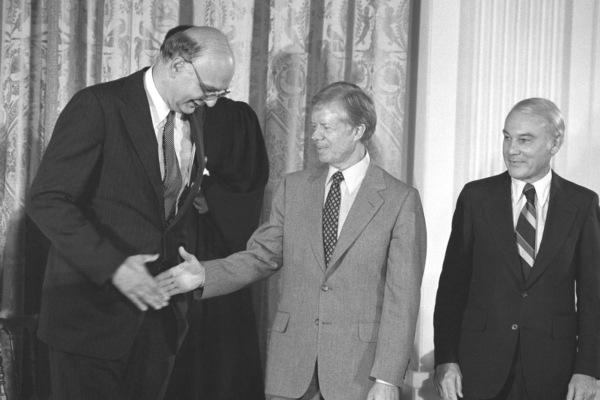
If, we take seriously, as the contributors to this issue argue we must, the idea that capital has reached the point where it can no longer afford to (and so no longer understands itself as needing to) legitimate itself in the terms of liberal democracy, then we must also take seriously the idea that the most we can currently get out of our elections is what the ruling class will allow us to get.
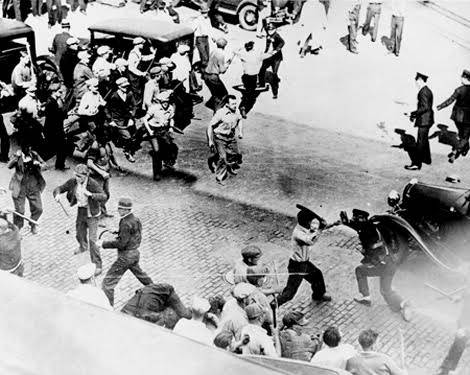
The Logic of Austerity

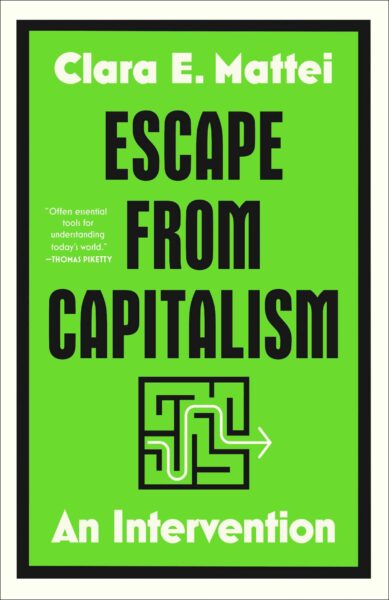
It’s time to stop buying into the idea that, within a capitalist society, it makes sense to discuss economic policies according to the criterion of “right” and “wrong” for an elusive common good. Our economic machinery is structured not to meet the needs of ordinary people but to increase the rents and profits of the few capital holders. Economic policies cater to these priorities. What critics point to as “problems” of the system—poverty, inequality, and unemployment—are actually its precise “solutions.”

The Neoliberal Roots of Contemporary Authoritarianism and Fascism

Across the globe, markets were deregulated, entailing removal of restrictions governing how capital could operate and move across borders. Perhaps most significant in this regard was the deregulation of finance and the floating of exchange rates, making states much more vulnerable to movements in bond and currency markets and therefore subject to their discipline. Key supranational institutions became repurposed to oversee the new neoliberal rules governing cross-border trade, in which sovereign decision making was assumed to be the exception rather than the norm and corporate rights were elevated.

Triumph of Capital, Crisis of Democracy

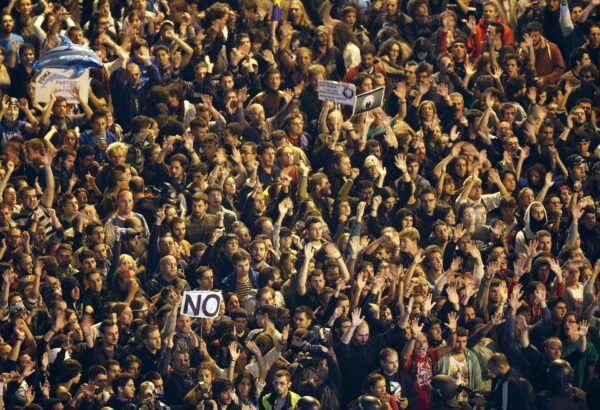
We argue that Trumpism arose from a political and social crisis generated by the success of accumulation. This crisis resulted not from the decline of capitalism or the exhaustion of accumulation but from the state’s inability to contain the fallout of capitalist triumph. Indeed, it only intensified with the economic recovery as profits reached record heights. Trumpism was therefore not a “card” played by a capitalist class seeking to reverse its declining fortunes but resulted from the mobilization of a contradictory class coalition amid an uncontrollable crisis situation.

Neoliberalism and the Periodization of Capitalism

The postwar decades continue to be presented as an inspiration for progressives today. The essay challenges how progressive it really was and notes that it was precisely in the Golden Age that the American Empire emerged as the most ambitious neoliberal project in history. This leads to a discussion of how this impacted the Golden Age domestically, and how this globalized neoliberalism both matched and differed from the neoliberalism we speak of today. The conclusion stresses the polarization of options in the present moment and the implications for the politics of the present.

Matisse at the Grand Palais

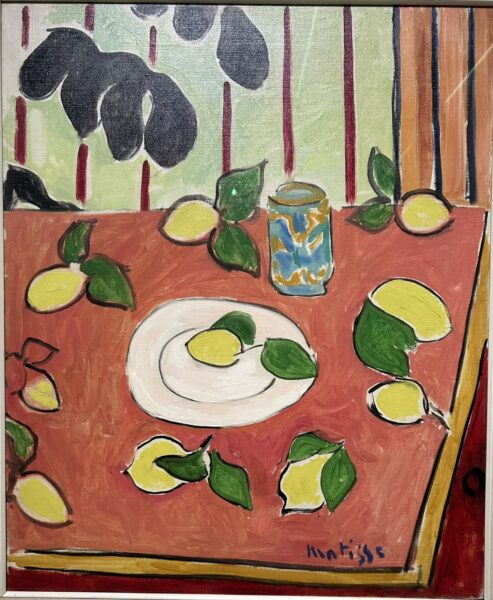
Matisse’s extraordinary late works—paintings, drawings, cut-outs, books—are conflictual through and through. The recent exhibition at the Grand Palais makes a surprising case for the centrality of Matisse’s late paintings as some of the most representative works of his career. Above all, Matisse’s late interiors show how the pursuit of the modernist ideal of a unified picture plane was as much a constraint as a liberation.

Inside the issue

You May Also Like

Issue #55: Capitalism 1996–2026 (Part One)

We live in a world where what look to many like social problems (inequality, unemployment, poverty) function in fact as economic solutions. This special issue of nonsite—Capitalism 1996–2026—shows how capital’s successes have made opposition more difficult but even more essential with essays by Sam Gindin, Steve Maher and Scott Aquanno, Damien Cahill and Clara E. Mattei. Also, a review of Matisse at the Grand Palais by Todd Cronan. 

Inside the issue

Introduction to Capitalism 1996–2026

If, we take seriously, as the contributors to this issue argue we must, the idea that capital has reached the point where it can no longer afford to (and so no longer understands itself as needing to) legitimate itself in the terms of liberal democracy, then we must also take seriously the idea that the most we can currently get out of our elections is what the ruling class will allow us to get.
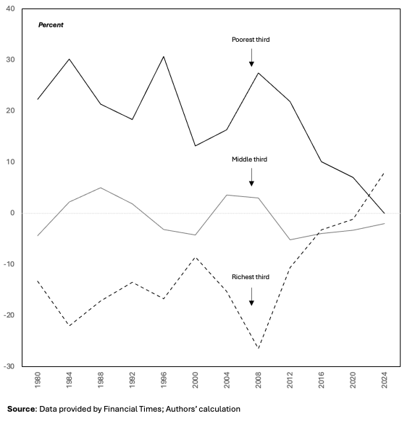
The Logic of Austerity

It’s time to stop buying into the idea that, within a capitalist society, it makes sense to discuss economic policies according to the criterion of “right” and “wrong” for an elusive common good. Our economic machinery is structured not to meet the needs of ordinary people but to increase the rents and profits of the few capital holders. Economic policies cater to these priorities. What critics point to as “problems” of the system—poverty, inequality, and unemployment—are actually its precise “solutions.”

The Neoliberal Roots of Contemporary Authoritarianism and Fascism

Across the globe, markets were deregulated, entailing removal of restrictions governing how capital could operate and move across borders. Perhaps most significant in this regard was the deregulation of finance and the floating of exchange rates, making states much more vulnerable to movements in bond and currency markets and therefore subject to their discipline. Key supranational institutions became repurposed to oversee the new neoliberal rules governing cross-border trade, in which sovereign decision making was assumed to be the exception rather than the norm and corporate rights were elevated.

Triumph of Capital, Crisis of Democracy

We argue that Trumpism arose from a political and social crisis generated by the success of accumulation. This crisis resulted not from the decline of capitalism or the exhaustion of accumulation but from the state’s inability to contain the fallout of capitalist triumph. Indeed, it only intensified with the economic recovery as profits reached record heights. Trumpism was therefore not a “card” played by a capitalist class seeking to reverse its declining fortunes but resulted from the mobilization of a contradictory class coalition amid an uncontrollable crisis situation.

Neoliberalism and the Periodization of Capitalism

The postwar decades continue to be presented as an inspiration for progressives today. The essay challenges how progressive it really was and notes that it was precisely in the Golden Age that the American Empire emerged as the most ambitious neoliberal project in history. This leads to a discussion of how this impacted the Golden Age domestically, and how this globalized neoliberalism both matched and differed from the neoliberalism we speak of today. The conclusion stresses the polarization of options in the present moment and the implications for the politics of the present.

Matisse at the Grand Palais

Matisse’s extraordinary late works—paintings, drawings, cut-outs, books—are conflictual through and through. The recent exhibition at the Grand Palais makes a surprising case for the centrality of Matisse’s late paintings as some of the most representative works of his career. Above all, Matisse’s late interiors show how the pursuit of the modernist ideal of a unified picture plane was as much a constraint as a liberation.

You May Also Like